
Agile is the new motto for the Automotive World. At first, I did not like how it sounds, and I did not even know what it means. I wanted to avoid it, but it became unavoidable when we started to hear it in our executive management meetings, and from our customers.
You will see this word more than once on any job descriptions if you are looking for a new job, so I decided to learn it.
What does ‘Agile’ mean? It means to able to move quickly and easily. That’s what everyone wants in their work and personal life, right? This is especially true in an automotive environment where we work globally with customers, suppliers, and different manufacturing facilities. On my search for how to learn and apply the Agile mindset and method, I discovered that there is also a Design Thinking methodology. This is where my story begins.
In March, I took my first Design Thinking training, and I found it very helpful. It was not only the training that made it interesting, but also as a part of the training, we had to facilitate our own workshops.
I must admit it was challenging, but it opened my eyes and made me more aware about my work environment. We applied the design thinking methodology to our real work problems. I was so lucky to have a wonderful workshop team which I admired more during the workshop for their contribution, engagement, and ideas. They inspired me more, and I promised myself to learn more and include them in many more workshops.
During the workshop, we applied the 6 steps of the Design Thinking method. The first 3 steps were the problem space, and the last 3 steps were the solution space.
When you google, you will find so many sources, studies and examples. I am adding the Wikipedia link ‘https://en.wikipedia.org/wiki/Design Thinking’, if you want to read more about it. Also, Stanford University has a beautiful introduction about the Design Thinking, and a 45 min YouTube video which can provide you more information.
Here are the Design Thinking steps;
- Empathize (Understand and Observe) – The step where we focus on understanding of our users’ need
- Define (Synthesize) – The step where we find out customers’ pains and gains
- Ideate – The step where we generate ideas to solve the problem
- Prototype – The step where we are designing prototype / solution to the problem
- Test – The step where we review our prototypes with our customers. We will iterate these steps as needed until we find the best solution
To apply the steps, you do not have to have any design thinking knowledge; there are tools that can be applied to each step. I was so lucky to have 3 great mentors and they prepared all the tools and materials for the training I took, and I used the similar tools for my own workshop.
At first, it may take time to connect the dots and understand the process, but once you follow the steps, you get the point. For example, at the beginning I was not quite sure why the design thinking has a long problem space, since we knew what the problem was, and to solve the problem we were using the design thinking method. Let’s face it most of us always assume we know what the problem is, and we always have an initial solution in our mind. Design thinking teaches us that we may not be aware of the real problem. It helps us to focus on our users, to understand and empathize with their needs. At the end, they are the ones who need to be happy with our products and services.
When you follow the steps and reframe your problem, most of the time, you may find out the problem is not really what you were assuming. That’s what happened to me when I used design thinking methodology.
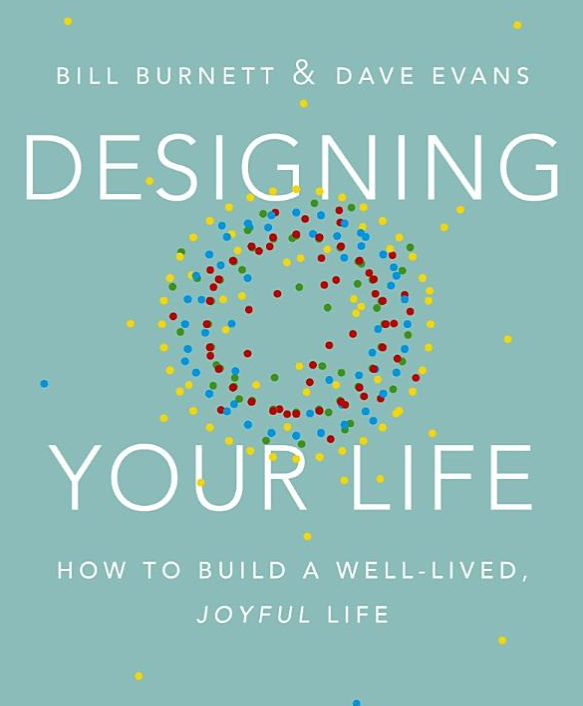
I also found out that we can apply the Design Thinking method to our personal life to create the life we dream. I did not think about applying it to my personal life until I noticed a book called ‘Designing Your Life: How to Build a Well-Lived, Joyful Life’ at Barnes and Nobles a few weeks ago. I decided to purchase it. I’ve only read the first chapter so far. It already made me so excited to see what I learned at the workshop can be applied to our personal lives. Book is written by the Stanford’s professors which makes it more accountable for me. Once I complete reading it, I will write a review. Also, the next step is to learn the Agile Methodology. Along the way on my search, I feel like I will continue to learn so many other useful tools, and methods.
I believe that it is worth trying and see the impact of this method. It may show us better ways to find how to live a well-lived joyful life as it says in the book.



 I’m a Project Manager with a deep passion for both professional and personal growth. Designing and building the next generation of vehicles is incredibly rewarding, but it comes with its challenges—especially for someone as emotionally invested as I am!