
 The automotive industry is a high-paced demanding environment, and all we want is to launch a successful project and start shipping our final products to our customers. However, shipping products is the last phase; before that we have several years of hard work to come to that phase, such as: creating a design which meets our customer’s needs, validating the product which ensures our product is capable, and getting approval, which means we are committed to deliver the final product with an agreed volume and quality.
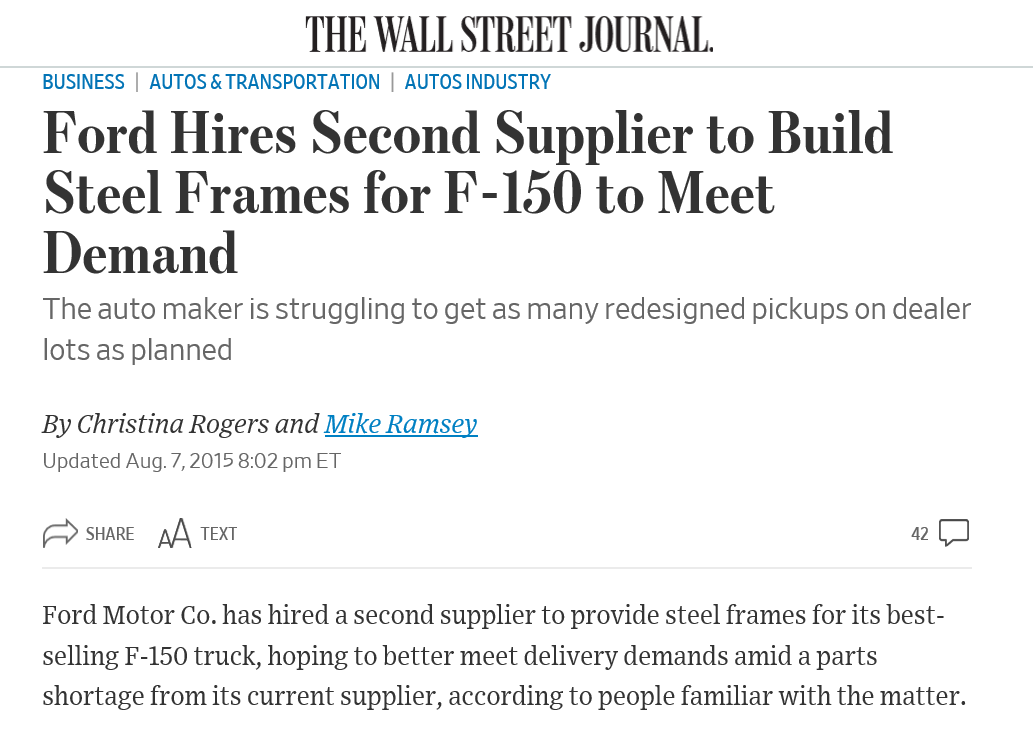
What is more, we need to keep meeting our customer’s demand until the end of the product lifetime. However, it is not easy. For example, here is an article from the Wall Street Journal, which explains what I wanted to say in a sentence. Unfortunately, if we are having trouble meeting our customer deliverables, no matter what was agreed on at the beginning of the program, we may end up losing the business.
If you are working for an Automotive supplier, you may feel sorry for this supplier because it takes a very long time and hard work to be able to start shipping the final product to the customers. These are the points that I will share with you: What are our deliverables, and how we get approval.
Project deliverables are what our customers are expected to receive at the end of each project phase, and also at the end of a project. It can be a feasibility agreement, timing, prototype parts, software, data, and the final product.
The question is: how will we define and ensure that we deliver the project outputs on time? As a program manager, it is our responsibility to learn our customer’s expectations and the timeline for each deliverable. So, from the beginning of the program, we can define each deliverable, make a plan, and agree on the project deliverables deadlines with our customers. Our goal is to launch a successful project, which means our deliverables should be on time, of excellent quality, and within budget.
One of the mistakes we all make is focusing on the final deliverables. However, all of the project deliverables are equally important for a successful project. For example, in the automotive industry, the projects always have similar paths regardless of the customer. Also, each project deliverables link to each other, so if we have a delay on any of our deliverables, this may impact our final deliverables.
I used to work for a small automotive supplier. We had four critical deliverables that linked to each other. First, we had to design our parts and get approval from our customers. It was one of the first essential deliverables.
Then, we had aluminum molding, machining, and assembly processes. All of these divisions had their unique documentation, and quality reports that needed to be shared with the customers. Besides the manufacturing process, we also had capacity commitments, packaging, supplier PSWs (Part Submission Warrants) that we shared with our customers. If any of these deliverables were missing, we couldn’t receive the final product approval, and PSW sign off. It was one of my favorite documents to prepare because it was the last document that was needed to conclude the project.
For automotive program managers, a signed PSW means that our customer is happy with the requirements of the delivery date, quality, process capability, and production capacity rate. It is the final document and deliverable for a project. Even though our final deliverable is the most important one, each phase and small deliverables contribute to it and lead us to the final outcome. Lao Tzu explains it very well, ‘The journey of a thousand miles begins with one step.’
Once we obtain a PSW approval, we can start shipping serial production parts to our customers as we committed. Otherwise, as it is mentioned in the article above, consequences may not be resolvable.



 I’m a Project Manager with a deep passion for both professional and personal growth. Designing and building the next generation of vehicles is incredibly rewarding, but it comes with its challenges—especially for someone as emotionally invested as I am!