Blog

How We Sold Our Home in Just 2 Weeks!

We sold our home in just two weeks — not because the market was easy, but because we took full ownership of the process.

We didn’t rely on staging companies.
We didn’t blindly trust agents.
We treated the sale like a project, with clarity, data, and intention.

And it worked.

The turning point: ownership

We interviewed four real estate agents. All were competent, but none felt emotionally invested the way we were. This wasn’t just a transaction!  We had built this home, waited 18 months for it, and truly believed we’d live there for years.

When life changed, selling a nearly new home felt risky, emotional, and expensive. So my husband and I made a decision: We would own the process end to end.

What actually made the difference

  1. We stopped relying blindly on opinions and started using data. We researched:
  1. We decluttered aggressively
    No personal items.
    No excess furniture.
    No emotional attachment.

I learned a powerful idea from Audra Lambert:

Buyers need to feel like they’re walking into a hotel — not someone else’s life.

That mindset changed everything. She is very cool, take a look –> (5) Audra Lambert – Lambert Group Homes – YouTube

  1. We aimed for 60% empty
    The goal was space that could breathe.
    Even though we had a large home with relatively little furniture, going through drawers, closets, and storage still took time and discipline. But it was worth it.
  2. We staged the home ourselves — simply and intentionally
    No overdesign. No trends.
    Clean lines, neutral tones, and green plants for warmth and elegance. Those plants are now in our new home!

Yes, we did choose an agent in the end but intentionally

After research, we selected a local agent who: 

  • Came with a clear plan
  • Walked the home carefully
  • Charged a fair commission

He was professional and supportive. But here’s the honest truth:

Even the best agent will never care about your home as much as you do.

Being a project manager helped more than I expected. I treated the sale like a project:

  • Clear scope
  • Data-driven decisions
  • Defined start and end dates
  • Intentional execution

When everything aligned, the right buyers showed up quickly.

The biggest lesson–> No one will manage:

  • Your life
  • Your money
  • Your outcomes

better than you.

Ownership isn’t about doing everything alone, it’s about being intentional, informed, and accountable.

And that principle? It works in real estate, career growth, leadership, and life. Take ownership. It works in anything you do.

As I step into 2026, my goal is simple: to take full ownership of my career — my growth, my choices, and my direction.

I hope you choose one thing that truly counts this year. If you do, I’d love to hear about it.


Goals: Focusing on What Truly Matters

Have you set any goals for the year, or, like me, did you suddenly realize it’s already February?

I often start a year with a long list of goals and dreams. However, I have noticed that when I write them all down, I tend to forget the first one by the time I reach the last. My mind is always racing, always wanting more. And every year, I carry over unaccomplished goals to the next, feeling as though I am constantly chasing after something.

This year, I decided to take a different approach. Instead of overwhelming myself with an endless list, I planned to set ten goals, prioritize five of them, and keep the other five as “nice-to-haves.” If I could not get to them, I would not consider myself a failure. With this mindset, I was ready to start my list. I made myself a cup of coffee, arranged for some help with the kids, and sat down to focus on our investment plans. Just as I was about to begin, I came across heartbreaking news—a tragic American Airlines passenger flight crash. As I read through the details, I could not hold back my tears. There were children on that flight—young lives full of promise, taken away in an instant. There were hardworking, successful people with bright futures ahead of them. None of them had any control over what had happened. My thoughts immediately turned to my children and my husband.

As if the universe wanted to reinforce how fragile life truly is, my mom mentioned another devastating incident that had happened a few weeks ago in Turkey. There was a hotel fire in Bolu, where 79 people lost their lives, including children—all due to the negligence of others. I could not help myself and searched the details and also, came across a video of a grieving mother, saying, “When you hear about these things, you feel sad, but you never think it could happen to you.” Her words struck me deeply.

Just moments before, I was thinking what kind of goals I would be setting such as—getting healthier and fitter, planning a vacation with my husband, finding good schools for the kids, and organizing a big family trip with our parents. But suddenly, all of those goals felt so insignificant.

At that moment, I realized that my biggest wish was simply to be healthy. I wanted my children to be healthy. I wanted to be present for them. Because if something happened to me or my husband, what would happen to them? And if something happened to them… I do not even want to finish that thought. These emotions overwhelmed me, leaving me in tears and making me feel incredibly vulnerable. But they also led to an important realization: While I can’t control everything, I can take steps to protect my family and cherish my time with them without taking it for granted. So, my first and most important goal for 2025 is simple: Take care of myself and be present for my children. Of course, I will still have other goals. But now, I understand that when I am healthy and with my family, everything else is just a bonus. And I will do my best not to stress over the small things.

Let’s make 2025 count—not just with checklists and goals, but with love, presence, and gratitude. While we can’t change the past, we can take steps to prevent future tragedies.

Becoming a Project Management Mentor

I’ve decided to focus on project management as a mentor and coach. I’m grateful to be recognized at work as one of the best project managers and to have been asked to mentor some of my colleagues. While this recognition is rewarding, it also adds pressure because I want to ensure that what I share is valuable and helps them grow and overcome their challenges. I’ve found that I genuinely enjoy these conversations. I often see patterns from my own experiences, and it’s rewarding to hear comments like, “Now I know what to do,” or when my mentees present an action plan during our sessions. With that in mind, I’m excited to share my experiences with a broader audience, especially those who feel overwhelmed and don’t know where to start, as it’s often difficult to find real-life examples. As a first step, let’s explore what’s available from the Project Management Institute and build on that. Here’s a great start—check out these free PMI courses to deepen your understanding of AI, Agile, and PMP in project management: PMI Free Online Courses. In the meantime, I’ll be preparing all the valuable insights that helped me become a better project manager, in hopes that they will help you too.

From Skeptic to Superfan: My Journey with Podcasts

My husband and podcasts? It’s a love story! He can turn a 5-minute chore like taking out the trash into a whole podcast episode. Airpods in, he disappears into another world. It used to drive me a little crazy.

A few years ago, I tried podcasts myself – project management stuff, even Harvard Business Review – but nothing clicked. Until a few weeks ago!

Now it is my turn:) Podcasts have become a life-changer and a wonderful source of work. I recently got hooked on “Coaching Real Leaders” with Muriel Wilkins. She is an amazing executive coach and the way she coaches the real-life leaders in her podcast completely changed my perspective on how I should approach my career.

There’s a whole world out there waiting to be explored. You can find anything and everything that may guide you. For example, today, I listened to the episode ” How to Build the Life You Want” from How To Academy Podcast which offered some practical tips that I’m excited to try!

I’d love to hear about your experiences and recommendations. What podcasts have captured your attention and left you wanting more?

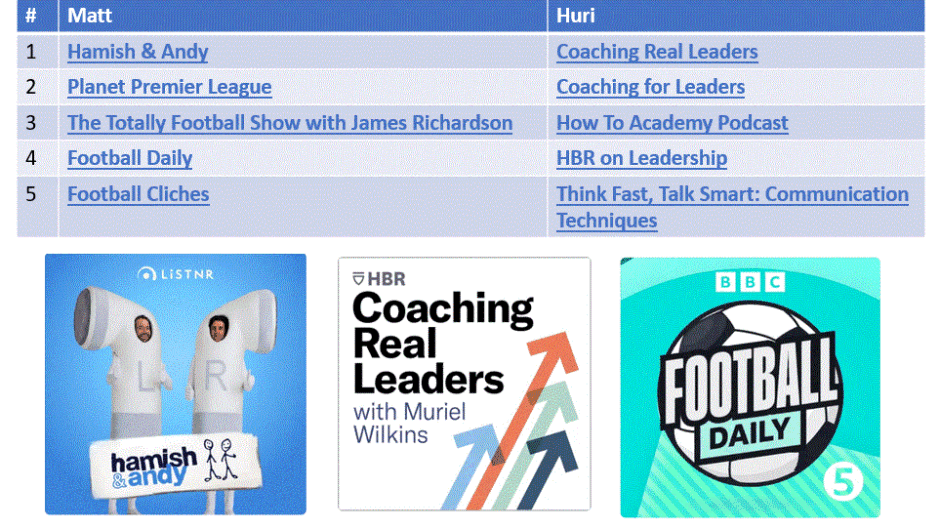
Here are hubby’s and my top 5 Podcasts

# Matt Huri
1 Hamish & Andy Coaching Real Leaders
2 Planet Premier League Coaching for Leaders
3 The Totally Football Show with James Richardson How To Academy Podcast
4 Football Daily HBR on Leadership
5 Football Cliches Think Fast, Talk Smart: Communication Techniques

Embracing Life’s Lessons: A Reflection on “The Last Lecture”

As 2024 approached, my husband realized he hadn’t read a single book all year (though he enjoys articles and news). Scrolling through the library app, he discovered “The Last Lecture” by Randy Pausch and Jeffrey Zaslow.

A few years ago, I’d seen the recorded video of Randy Pausch’s last lecture. A highly successful professor diagnosed with pancreatic cancer, Pausch poured his heart into his book and final lecture at Carnegie Mellon University. He aimed not only to share how he achieved his childhood dreams but also to leave meaningful life lessons for his three very young children, who wouldn’t have many memories with him. Since my husband could not put the book down, I decided to read too.

Reading the book was an emotional journey. Each page served as a reminder of life’s fragility and the importance of cherishing every moment. Pausch’s story, about dreaming big and achieving them made me re-evaluate my dreams and goals. His accomplishments inspired me. Even while battling illness, his energy and determination in delivering his last lecture for his students and community were truly amazing.

He also helped me to see what we are doing wrong at work with his sentence “ Adding manpower to a late software project makes it later.” I felt like this is what we did last year during my project 😊. Now I know more than ever that less is more because I believe we accomplished more results with fewer people in my project this year.

I highly recommend both the book and the last lecture video. They serve as powerful reminders that life is short. We should strive to make the most of it, just as Randy Pausch did by sharing his inspirational story with the world during his last days.

Mom after thirty

When we found out we are expecting a baby, the only thing I could think of was her health. I just wanted to have a healthy baby. I did not worry about if our baby was a boy or girl or the changes my body had to go through. I was assuming that all moms might have a similar approach to what I have; however, through the discussion forums, which you can get through pregnancy apps, I felt like I’m from a different world. The worries and discussions of the pregnant moms were quite interesting and made me feel lucky to have our first child when we’re wiser and more mature. I call this becoming a mom when we are mature enough to know our responsibilities.

Most of us have no idea what we are getting into before we have children. Even earlier than that, we aren’t even aware of what to expect and feel when we find out that we expect a baby. Based on our ages and maturity level, how we feel about pregnancy and having a kid can be very different. Here are some things to think about when you are having your first child in your thirties:

Healthy pregnancy:
I believe that this should be the most important thing for all new moms. Not only does our baby’s health matter, but also how we take care of ourselves makes a huge difference. I’ve been living in the USA for the past six years and had never been to a doctor before. I was very healthy, exercised regularly, and ate quite well. So, I did not want to spend a dime at the doctor’s office. The first sudden change was my doctor’s visits. Since I’m pregnant, I want to go to the doctor to be sure our baby is healthy and growing as expected.

Our Body Changes:
We all know that our bodies will be transformed during and after our pregnancy. Even though we don’t have control over certain changes, we can still improve the process and try to gain only the necessary and acceptable weight for our babies. What made me sad is that so many pregnant ladies were emotionally and mentally very upset and losing sleep about their look and weight gain. It is not a beauty contest or competition, so our goal should be to have a healthy pregnancy and accept our weight gain. Once we have our kids, we can go back to our routine and have a fit body. At least, this is my plan. I accepted that I would have some stretch marks and weight gain. As long as my baby and I are healthy, this situation won’t bother me.

Work-Life:
I’m one of the lucky moms-to-be. I have a decent income and a job that I like. Even though the past six months were very stressful, my pregnancy did not impact my performance. My concern was the programs I managed and their milestones and how their dates would align with my due date. I will be away from work for three months, so before my maternity leave, I’m doing my best to plan my program schedules, and I’m trying to manage my workload. When we have a job we deeply care about with a good income, we also think about our job situations more. So, this is one of the downsides of having a kid at a later age. When I look at the forum discussions, some people didn’t have jobs or relied on their parents and partners. So, it is one of the biggest challenges for young moms.

Screening for Syndromes (Down, Edward, and Patau):
This is one of the challenging subjects, and it can happen to anyone, regardless of their age, genes, and family history. I did not go through any screening because the result of the tests wouldn’t change my mind. Besides, these tests give a certain percentage of the possibilities that our babies may have any of these syndromes; they are not 100% accurate. Even thinking about it was scary, so I searched a little bit and found out that having any of these syndromes is increasing day by day. I saw some posts that some parents ended their pregnancy based on their screening results; it broke my heart, but I respect everyone’s decision. The only thing I can do is to pray for a healthy kid for everyone, including myself.

What to eat, drink, or smoke:
The things that are not good for our body are not good for our babies. So, I was shocked to see the discussion forums because some of the moms ask each other how many glasses of wine are OK to drink or if they can smoke marijuana. I don’t smoke and drink. Even if I did, I would stop once I decided to have a kid. Our babies are very vulnerable, so smoking, drinking, and eating unhealthily may harm them. I wish everyone was more mindful because we are all blessed to have a kid, and we should be grateful and take care of them well.

On the other hand, I learned that some healthy-looking food could be harmful during pregnancy, such as green papaya and hibiscus tea. I love green papaya salad and ate each time I go to a Thai restaurant or even made it home. So I was glad I found out about this early in my pregnancy and stopped consuming it. After this it became a habit for me to search what I can eat or not during pregnancy.

Baby Registry and Gifts
I was surprised to see so many new moms were obsessed with their baby registries and baby showers. Many of them were very upset not receiving the gifts or not having many attendees for their baby showers. To me, no one has to buy anything for my kids, including my parents and my husband’s parents. It is my child, and I’m fully responsible for whatever she needs.

Overall, I see more benefits having a kid when we are older because, as we age, we get wiser and worry about more important things. My only concern is being healthy and having a healthy baby. I will continue to enjoy my pregnancy journey until we finally meet our daughter in December.

Taking the Break You Need

My sweet Hubby while taking the sunrise picture at Hilton Head Beach

When I was a kid taking a vacation meant visiting my grandparents and helping them on the farm. It was fun because I liked the village life where my grandparents lived. My expectations changed when I became a teenager. I wanted to go to a beach or family vacation, which never happened because my parents wanted to see or felt obligated to visit their relatives and parents.

I never thought I would feel the same way when I grew up. Unfortunately, I sometimes do. However, it doesn’t change my decision about my vacation plans because I strongly believe that we all should have some quality time doing  what we prefer. So, I do my best not to let my mom try to control me 5000 km away.  I prefer traveling to different places, discovering new cultures and new cuisines, and spending time with my husband rather than using it for family visits.

This year was extraordinary. Because of the Covid 19 pandemic, we couldn’t plan our vacation the way we dreamed of. We still did our best to make it fun with the current circumstances. We did not want to take a flight during the pandemic, so we planned a two-week road trip . Considering we’ve been working from home since March, we were ready to get away from Michigan.

First, we traveled from Michigan to Pittsburgh, which was a lovely stop. It is a beautiful city; we had no idea of the topography of the city, which was quite hilly. We also had a chance to see our friends who lived there. We had a lovely time discovering a new destination.

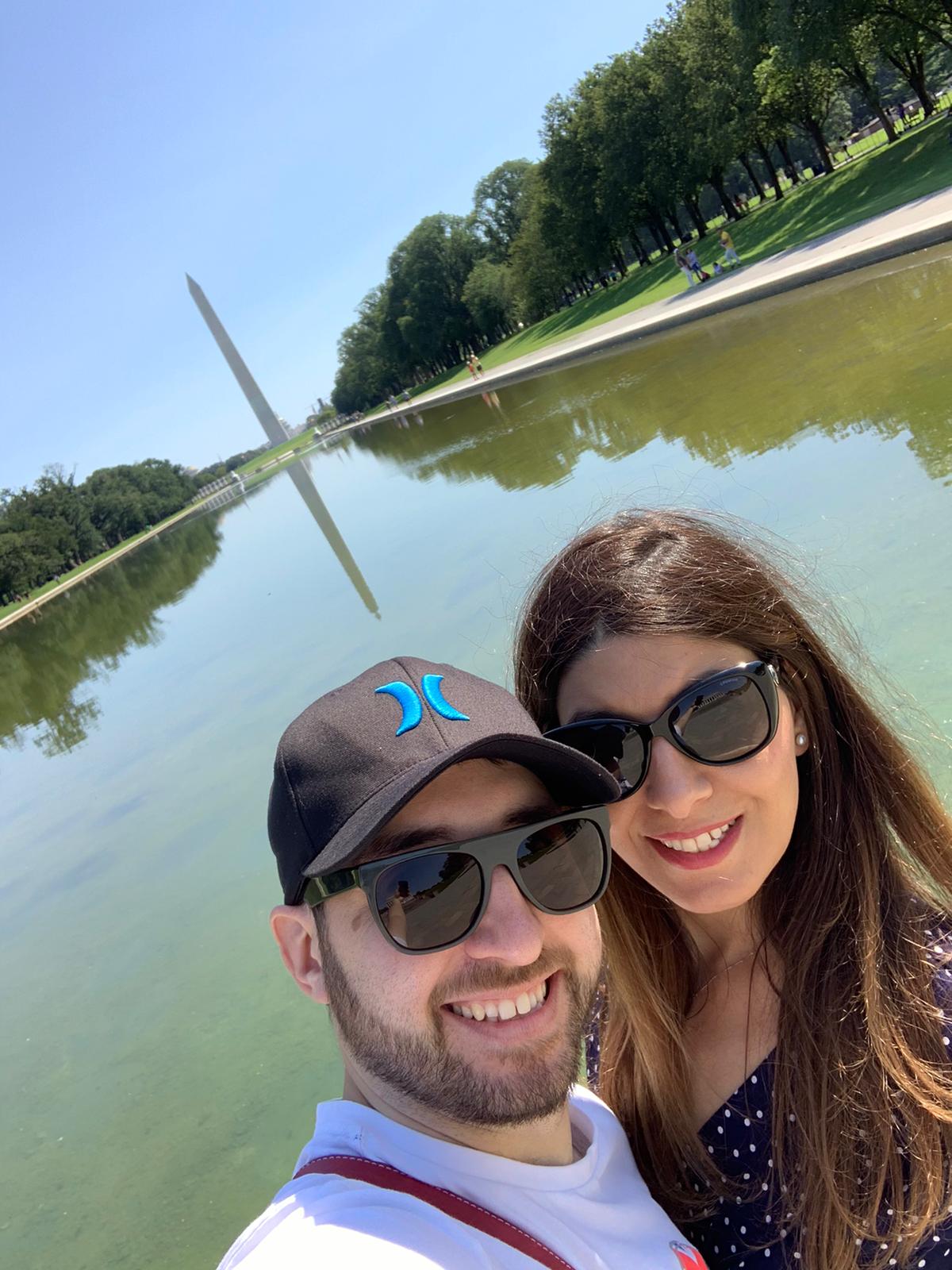
Then, we visited Washington, DC, which was lovely. However, the museums and some of the other capital’s attractions were closed. It was still worth it to stop there. The food was delicious, and we had a chance to try some Turkish restaurants around the area. We walked quite a lot and took advantage of the beautiful weather.

Washington, DC, Washington Monument

Our next stop was Virginia Beach, which was only 4 hours away from Washington DC. We did not have a lot of expectations. We did not want to drive very long, so we used Virginia Beach as a stopping point. Even though it was rainy, it didn’t bother us. Also, we had one of the best breakfasts of our trip. We walked by the beach and had a relaxing time. The best part of Virginia Beach was shopping. There was a lovely outlet center, which we ended up shopping for around 5 hours because the prices were irresistible.

Java Surf Cafe and Espresso Bar, Virginia Beach

Virginia Beach Walk


During the rest of the trip, we visited Raleigh, Charleston, Atlanta, Hilton Head Island, Cincinnati, and Columbus. While my husband was driving, I was like a little kid trying to find restaurants at which we could eat. We loved North Carolina and Hilton Head a lot, which made us think of moving to that area in the future. The nature was beautiful where ever we went, and even just driving from one state to another state was worth it. We exercised, discovered new places, and tried so many new restaurants. It was a good break, which boosted our energy and motivation.

Tennis game at Raleigh, Pullen Park

We were happy because we were finally away from our home and didn’t have to think or talk about our work. Also, taking a road trip allowed us to talk about our future plans and listen to some audiobooks and current news. It was a great feeling knowing that we did not have to call into any meetings for a while or would not be  dragged into another urgent issue at work. Even though we were aware that our busy work was waiting for us, it was a great relief to be able to stay away from our laptops and work e-mails. What is more, it reminded us life is not all about our little world in Michigan.

Hilton Head Island

Regardless of how much we love our homes, where we live, or our jobs, we all need to take a break from our regular routine and take a vacation. Taking a break or going on a vacation doesn’t mean running away from our busy work and everyday chores; it means taking the chance to evaluate our lives and have some quality time away from our routine. If we use this time wisely, we can have a more fulfilled and motivated life when we are back from our vacation.

Overall, I believe that taking a vacation and having some quality time that makes us happy and refreshed is a great investment for our well-being. As Matthew Karsten says beautifully, “Investment in travel is an investment in yourself”, because once we refresh our minds, we will have a better approach and renewed energy which  to tackle everything  which is in front of us.

Focus on Yourself and What You Can Do!

“The only one you should compare yourself to is you. Your mission is to become better today than you were yesterday. You do that by focusing on what you can do today to improve and grow.”

  John Maxwell

Do you work after work hours, even sometimes at the weekends? There is no right or wrong answer to this question. Most of the time, we all do what feels right. In the past, I was heavily against working overtime. When I had to, I used to complain to my family and kept thinking about the people around me who got paid as much as I did, and who didn’t work as hard as I did. Not only would I feel angry but also, I would feel unhappy. This is another example of how we become unhappy by comparing ourselves with others. Finally, I learned to focus on myself, which took me more than ten years. I still work overtime. However, I’m happy to be able to complete my tasks because I see it as my responsibility. The question is, how can we work longer hours without feeling annoyed and still have time for our ourselves and our families?

The first mistake we all make is trying to separate our work and personal life. However, it is not possible to unplug our minds after work. Our personal lives impact our work life as much as our work lives impact our personal lives. So, we need to learn to be flexible and adapt to the new circumstances at home and at work instead of focusing on the idea of work-life balance. For example, if we have urgent customer deliverables or delays in our projects, we can check our e-mails and work on the uncompleted tasks after spending some time with our family. So, even if we end up working several hours at home, giving a break will refresh our minds and help us to approach our work with a positive attitude. If not, our minds will keep thinking about unfinished tasks and unanswered e-mails.

The second mistake we make is trying to avoid the issues and late tasks. When we go home, we can stop thinking about work; however, the next day, the same issues and even more tasks will be waiting for us. So, regardless of the time, weekdays or weekends, the best thing is to get things done and empty our minds. This will allow us to feel in control instead of feeling lost and confused at work. At least that’s what works for me.

The third mistake we make is being annoyed by others at work. In the work environment, we have all kinds of people, and not all of them feel the same responsibility and ownership of their job. This was the hardest to learn because wherever I have worked, there have been people who have found time to chat for hours about non-work-related issues, watch YouTube videos, shop online, study for their degrees, and come to work 9:00 am and leave at 3:00 pm. I accepted this reality, and I can’t change this fact. So, when I struggled to finish my tasks after a long working day and brought work home, I couldn’t help myself and hated my life.

Finally, this year, I learned to focus on my job and myself. Everyone is responsible for their actions, and if they feel comfortable the way they spend their time at work, it is their problem. It sounds simple, but it is not easy to apply. Back in February, my husband and I took a course called  The science of well-being, which had a huge impact on us. It showed us that most of the time, people were unhappy not because of themselves but because of the other people around them. For example, they observed employee happiness and satisfaction before and after sharing with them how much their colleagues were making. If their colleagues were making more than them, their happiness and performance level changed drastically. The course shared many other eye-opening scientific studies and surveys that woke me up to the fact that that’s what I was doing all these years.

Another surprising example was in one study, and they found out that if your neighbor purchases a new car, most likely you will change your car in six months. This is another example of how we let others impact our life and happiness. If we can learn not to focus on others’ salaries, homes, and attitudes, we will have better lives.

Another mistake we make is trying to keep things in our minds. Countless researchers suggest that when we remember to send an e-mail, buy something, and plan for a meeting, or when we feel angry, we should write it down and empty our minds. They even recommend to keep a notepad next to our bed, so we can jot down anything which pops into our mind. For example, over the past few weeks, I had to work in the evenings and weekends because I had so many tasks that I needed to review, and I didn’t feel comfortable leaving them undone. On Friday morning, I woke up at 4:00 am and found myself thinking about work. I tried, but I couldn’t go back to sleep. I woke my husband up around 5:00 am, since he has 7:00 am meetings on Fridays. We decided to take a quick walk to get some fresh air. We were both happy because we started our day early, planned our day, and wrote down what we needed to do. The best part was I didn’t think about anything or anyone else other than having a productive day to be able to enjoy our weekend.

Overall, it is all up to us how we approach our work and perform it. If it helps us feel better and accomplish our task more efficiently, it is Ok to work overtime. As long as we understand our responsibilities and have an optimistic approach to our work, we will eventually show our differences and feel successful and fulfilled with our jobs and lives. In the end, we have one life to live, so we should focus on ourselves and make the best of our work and home life instead of trying to find a work-life balance or comparing ourselves with others. As  John Maxwell says, “The only one you should compare yourself to is you. Your mission is to become better today than you were yesterday. You do that by focusing on what you can do today to improve and grow.”


Learn to Escalate, Whether You Like It or Not!

If you are a program manager, don’t you feel sometimes you are babysitting for your team members? It is a challenging job, considering each program launch takes around two years. During this duration, we lead every aspect of the program and expect each team member to understand their responsibility. In the real world, it doesn’t happen all the time. One way or another, we can have difficult people in our team who give us a hard time. So, how can we handle these difficult people with professionalism, especially when we are under time pressure from our customers and upper management?

We are the owner of the program, and it is our job to remind our team members of the project scope, milestones, and actions that need to be taken to meet each customer’s deliverables. But so many times sending e-mails, skyping, calling, texting, and having meetings with our team members are also part of our job to ensure they are doing what they promised to do.

If you are new in program management, the first rule you need to learn is to follow up on the actions. Otherwise, you will be talking about the same open activities for the next meetings. Unfortunately, if we don’t remind them and ask about their progress, again and again, our team members may feel what we are requesting is not urgent and can wait for another week. This part of our job is necessary, but it shouldn’t be our actual job because we need to coordinate and perform many other activities and make sure that each dependent activity progresses as planned and the next activity can start on time. The nature of our job is not only to connect each project step and activity but also to build connections with our team and customers. Overall, our goal is to complete our program successfully and celebrate our accomplishments as a team.

Most of the time, we have limited time between the customer milestones, and we have to focus on the big picture by coordinating our team members’, plants’ and suppliers’ activities. When working hard to put things together, we may be challenged and get pushback from our team members about absurd reasons. This is one of the biggest problems we all face, but we need to find ways to resolve conflicts if we can; if not, we need to learn how to escalate.

I’m not a person who escalates issues or people because I take my job personally. I used to think that escalating issues or people is for weak program managers, who can’t handle their work. So, I’ve not escalated most of the problems or difficult people that I dealt with over the past 15 years in my career. I’m not proud of it because I added extra stress and pressure on myself by thinking this way. Since 2016, I have taken many online classes and read many articles and books to understand and learn how to manage my team and deal with difficult people. However, as I lead more profitable programs, I also understand the importance of my position and the impact of possible delays.

As a program manager, we are responsible for our program’s success, so if we miss customer deadlines, we are the ones who need to take responsibility and blame. However, if there are external issues that may delay our activities and keep us awake at night, we must make our managers aware of the situation. It is not complaining to our managers about our suppliers, customers, or team members. We can prepare a one-page executive summary and explain to them: What are the issues? What actions did we take to solve it? What are the risks for our program? This must be done promptly, not in the last minute of the customer delivery date. If we don’t escalate the high risks on time and miss our deadlines, it will be solely our fault even though it is caused by someone else. What is more, the escalation will come from the customer for missing their milestones.

So, how can we make sure we don’t come to this point? We need to explain to our team members the consequences of their actions, and why we need their response at certain times. We are the primary customer contacts who oversee their expectations and required changes. Later on, we share this information with our team members to be able to align our internal activities. In a perfect world, we receive updates and feedback from our customers on time and should have enough time to align our team members. However, sometimes we face last-minute changes and requests, so we expect our team members to be more proactive and supportive. Some of them are proactive, but some of them are reactive. Unfortunately, we can’t control anyone’s reactions; however, we can control our responses. We can share the customer process and system with them and explain how things work in our PM world. We also should understand these people have other projects to support, so we should give some time to complete their work for our program if possible. However, sometimes some of them have an attitude problem, without listening or trying to understand the situation they resist and don’t want to do their job. After all our attempts, if they still don’t want to take any action, complain, and give us a hard time, there is nothing wrong with sharing the situation with our managers.

In my experience, we’ve always found a way to complete our actions and meet our customer deadlines on time. Sometimes, we’ve had to negotiate with our customers for an extra week or two, which is another part of our job, but we’ve always managed to meet our milestones.

There will always be last-minute changes in our programs. As a team, we need to apply all our resources, resolve the conflicts, and focus on our goals. We should create a positive relationship to create a positive environment. Regardless of what we do and where we work, we will always have some difficult people around us throughout our careers. The name, face, or position may change, we need to learn how to manage these people. On the other hand, we need to remember these kinds of people must also be difficult for others, so we shouldn’t take anything personally and continue to be resilient.

There may be times we get frustrated at work, but it shouldn’t steal our joy and keep us awake at night. We should do our best to keep our professional relationship with everyone while ensuring everyone is working on their assignments. In the end, the reason why we are working together is to launch a new program, so our company can start making money from it as soon as possible. If there is a person, supplier, or anything that may delay our customer milestones, this needs to be escalated, whether we like it or not.

Be Water: An Inspirational Documentary

So far, none of the 30 for 30 ESPN documentaries disappointed me. All of them have very unique life stories, and they produced consistently high standards. That’s how we decided to watch a documentary called “Be Water “. It was an extraordinary documentary with so many beautiful messages. It was about Bruce Lee’s life. I wasn’t a Bruce Lee fan; besides, I didn’t even know who he was.

When we started watching the documentary, it didn’t take us long to see his strong personality and how much he cared for and respected his nationality. He was born in the USA because his father was performing Chinese opera in the United States during that time. He grew up in Hong Kong, and due to his father’s job, he became an actor in his early years. He also trained in martial arts and learned Chinese Gung Fu. Later on, he moved to Seattle for his university degree and started a new life in the USA.

He was extremely nationalistic and cared about how Chinese people were seen in America. He did his best to promote his culture, his traditions and especially Gung Fu. He gave martial art lessons to his friends to introduce his beautiful culture. His goal was to open martial art schools, which he did. He gave Gung Fu lessons to the American people and shared his philosophy with them.

He found his way to Hollywood through his martial arts success but as a co-star. Even though he was very talented, at that time, Hollywood was not diverse and open to foreign actors. The documentary also shared how African American and Asian people were treated in America. I felt like nothing has changed because 60 years later, we still see similar scenarios.

Some days, he couldn’t find any roles, but he still never accepted a role that involved humiliation to his Asian heritage and culture. He was very outspoken and wanted to contribute more to his films. When he realized that he couldn’t make it in Hollywood, he went back to Hong Kong. He became extremely successful. He still had his goals and his plan was to come back to the USA and make his movies to be able to share with the world Chinese Gung Fu and cultures through his movies.

During the documentary, he had a nice conversation with one of the reporters I loved the most:

Berton: “Do you consider yourself a Chinese? Or American?”
Lee: “You wanna know? A human being.”

It is a must-see documentary. As you watch, you will see that at a young age, Bruce Less was an inspiration for millions of people. He was not just an actor, a martial art master, or a philosopher. He was a real role model and an example to everyone with his life. It was a beautiful story. I hope my kids will be very proud of their heritage and appreciate their Turkish and British traditions and culture, like Bruce Lee.