Blog

You Wouldn’t Fail to Plan Your Wedding…

“You wouldn’t fail to plan your wedding, so why you are failing to plan your smaller projects.” Matthew Larner

A project plan is a formal document that outlines the project activities in detail. It should include what needs to be done, when, and also who will take the actions to deliver the project outputs. Indeed, we need our customers’ inputs and milestones to be able to create a successful and accurate project plan. So, we need to communicate clearly with our customers from the beginning of the project to make sure we are on the same page. Also, we should develop a good relationship with our customers, which leads to successful project launches and new future programs.

As a program manager, we are responsible for creating the project plan with our team. Once we identify our activities, critical paths, and their duration, we need to share our proposal with our customers. The critical point is that our plan should be realistic. We cannot afford to overcommit to our customers, and also, we should not expand our activities to be on the safe side.

In my programs, my customers always provide their key milestones, and it is my job to plan my activities within their deadlines. Sometimes, we have enough time to deliver our products. Occasionally, we may need to negotiate with our customers for an additional duration, or we need to tailor our plan to be able to meet their deadlines. At least we need to show them why we need more time for our activities.

Once we outline our plan, we need to have progress meetings to ensure our internal team members are working on their actions. Also, we need to have periodic meetings with our customers to get their feedback about our progress. There will always be issues, problems, delays; that is the reason each project has a program manager. As a program manager, it is our job to solve the problems, coordinate the activities, and monitor our project plan. The important point is that we need to know when and what to share with our management and customers. If the issues we are facing could impact our deliverable, this needs to be communicated earlier, not at the last minute. Not only will it help us to gain our customer’s trust, but it will also give us more credit for being transparent. As we do, our customers have their management, to whom they report the program process. So, if we share bad news with them very late in the program, it may hurt their credibility to their management and also may harm our relationship with them.

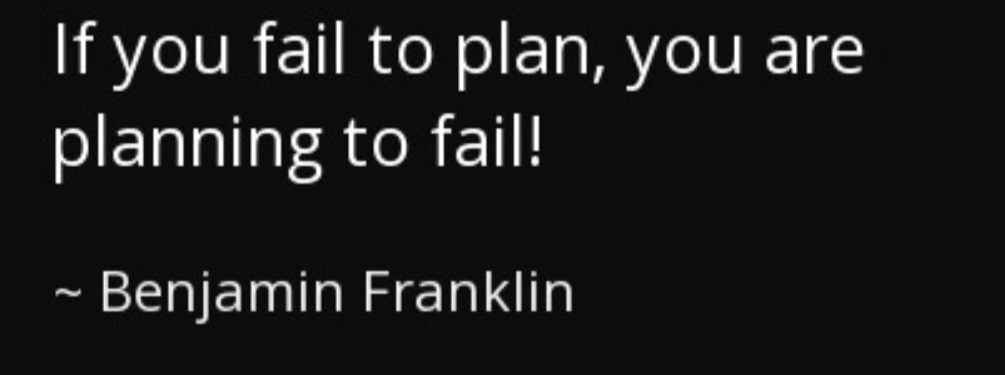
Overall, for the successful project, we need to create accurate planning and we also need our customer’s agreement. We also need to periodically inform them of our progress. With each new program, we will improve our planning skills. As Benjamin Franklin says, “If you fail to plan, you are planning to fail.”
Assess the Risk and Do It Anyway

Risk management is one of the critical steps for PMs, which should be assessed at the beginning of the project. It may seem hard to estimate the possible risks when we have a new program. We may feel everything is under control; however, if we are an experienced program manager, we would know that certain activities can get challenging. So, not only is it important to have experience, but also, we should have experienced team members and lessons learned from the previous projects.

So, what can we do to manage our project risks? The first step is creating a risk register, where we can log on to the possible risks, and then prioritize them based on their impact and occurrence. In the end, you need to decide on a response plan. If the risk is likely to occur and has a high impact, we need to avoid it by creating an action plan, select an owner, and the due date for the action. We can also mitigate it by creating a response plan. For these options, we need to execute our strategies to cancel or eliminate risks. We may also choose to accept some risks and do nothing or transfer them to a third party.

In my recent job, I observed other PMs and tried to understand their challenges to prevent similar situations for my programs.  For example, when I worked with the products that we shipped to China, I was not aware of their third-party certification process. I noticed that it might cause unpleasant delays. So, I managed to execute some of the activities in different orders to be able to prepare my test parts, and also scheduled testing several months before. Some activities can not be expedited, so if it is possible, we need to take proactive actions. That’s what I call risk management.

In new projects, we will always have uncertainties, and we need to learn how to manage them.Sometimes we learn by making mistakes; sometimes we learn by observing others’ experiences. We can also get help from experienced people, and if not possible, we can find so many useful online tools. However, whatever we do, we need to decide if we want to avoid, mitigate, transfer, or accept the risks in our projects.

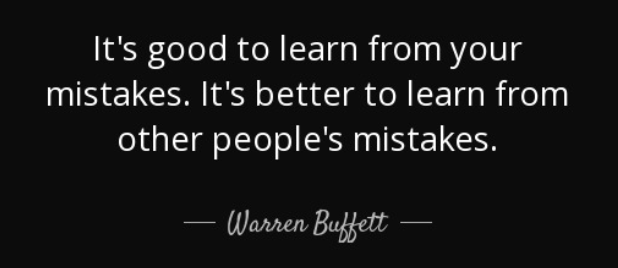
Assessing the possible risks is an essential part of program management. And, if we want to be one of the best in our job, managing our risks can help us tremendously.  We will make mistakes along the road and continue to learn from them. However, as Warren Buffett says, ‘ It’s good to learn from your mistakes. It’s better to learn from other people’s mistakes.’

How to Receive Feedback Mindfully

Finally, someone called me a high performer. I know I’m a high performer, but it still feels good to hear it from others. Even though I shouldn’t need anyone to tell me these words, I still would like to hear them. I’m still learning not to feel elated when I’m praised or not to feel discouraged when I’m criticized. However, I’m not where I want to be yet.


 

Last year, I accomplished all of my targets. I believe my supervisor and my manager are happy with my performance, but I still want to hear their genuine positive feedback and appreciation. If they do not show appreciation during my performance review, would it hurt my feelings and demotivate me? Most likely, it would. The question is, why isn’t it enough for me to be aware of my value, contribution and hard work, and just take in their point of view, positive or negative, without feeling any extreme happiness or frustration? There is nothing wrong with feeling this way as long as we are aware of our emotional state and not letting our emotions control us.


Scientists call this skill self-awareness, which is the first element of emotional intelligence. Self-awareness means not only being aware of our personality, emotions, strengths, weaknesses, and our value but also seeing ourselves, our attitude and actions as others see us. If we are aware of our capabilities, hearing an appreciative comment will not make us jump for joy or hearing negative feedback will not make us miserable. So, if we are a highly self-aware person, our response will be the same for both situations. We are still the same person. Our value and our contribution to our work have the same value; it is just feedback, which may or may not be accurate. So, we don’t need to overreact based on someone else’s opinion. However, we can honestly assess the feedback and try to understand where they are coming from. I know it is easier said than done, but it is the only way to grow. If not, we will be experiencing a similar emotional fluctuation again and again.


The good news is that I’m not the only one who needs to improve my emotional intelligence and self-awareness. According to the Harvard Business review’s nearly five-year research on the subject, they’ve discovered that although 95% of people think they’re self-aware, only 10 to 15% actually are. At least, I accepted that I have to work on this skill for my own well-being. 


Overall, this year I decided to take all the available emotional intelligence courses and read all the available books and articles. The first course I’ve started taking is called ‘ Empathy and Emotional Intelligence at Work. ‘ Berkley University is providing this online course through edX, which is an online course platform. My goal is to learn to manage my emotions and make better decisions at work and for my personal life.  


Many of us strive for a meaningful life and self-growth. However, most of the time, we avoid receiving feedback because we do not know how to handle it. I suggest that for the next few weeks, we seek feedback and try to understand the reasons behind it without labeling it negatively or positively. In doing so, we might be surprised to see the enormous benefits to our lives.

Benefits of Being a Project Manager

The project management profession offers a wide range of job opportunities. The question is, what are the requirements to become a Project Manager ? We can gain some of the qualifications by taking project management training, courses, or a certification. However, most of the time, project managers still need to have a bachelor’s degree to manage their responsibilities in their sector. For example, I’m working as an Automotive Program Manager, and my job requires technical knowledge, automotive experience, an engineering degree, and PMP (Project Management Professional) certification. Besides these skills, I continuously learn the specific product and customer requirements related to my current job, and also, I still work on my project management skills.

Sector knowledge and program management skills are equally important. Some of the vital program management skills are; defining the project, planning it from start to end, mapping out a timeline, executing and monitoring each phase, communicating with stakeholders, and solving any issues that may arise throughout the project. You see, knowing our process and product are critical when we define, execute, and monitor our programs. On the other hand, to be able to lead a team, we need to have good organization, communication, conflict management, leadership, and problem-solving skills. These skills may seem very basic, but they are critical to have a successful program.

The good news is that most of the program management skills are transferable to other jobs, companies, even different sectors. Taking PM training is not only helpful for program managers but also helps other professions. The value of this training and selecting program management as a career is that the knowledge you gained can help you to do your job better and also give you a chance to try other opportunities as well. I have a colleague who used to work as an IT program manager. He has been with our company and applying his program management skills to a new industry. He sometimes blends his IT knowledge of his work. We can even use our knowledge for our personal life see it’s benefits.

Overall, there are many values of project management as a career. It offers many job opportunities from different sectors. Regardless of the industry, we work for, we use similar program management tools and steps.

Stake-holders!

Stakeholder management is another critical process for a successful project. However, we always mismanage or underestimate it. Most of the time, we only consider our key stakeholders when we talk about project stakeholders. Yet, the stakeholder has a broader meaning than the core project team. A stakeholder can be anyone, a group, or an organization that directly or indirectly is impacted by a project. For example, if we share sources with other program managers, we also need to consider them as our stakeholders. As you see, other project managers have nothing to do directly with our programs; however, because of them, our plans may be delayed.
The best way to understand our stakeholders is by creating a stakeholder register. In this way, we can document and discuss as a team and decide who we need to include in our stakeholder register. The idea is identifying the shareholders who have high influence and interest in our project and what their expectations are. Also, our stakeholder’s interest and influence may not always be positive, so our goal should be to be aware of all the stakeholders and their impact on our success.
For many projects, customers and management are the most important stakeholders because they are the ones who can provide requirements, constraints, milestones, and funds. Also, throughout the project lifetime, we may have many short term stakeholders for different phases of projects that help us to complete our projects on time. Some of these stakeholders may not be even fully aware of their impact on programs, but without them, our projects can not be completed.
One of the most critical lessons learned I have learned from my projects so far: The more I engage and involve stakeholders, the more I reduce and uncover risks on our project. For this reason, weekly meetings with key stakeholders are essential because these meetings can help us to see misalignment early in the programs and prevent possible delays.
Last but not least, we need to pay attention to all our other stakeholders for a successful project because each stakeholder’s action matters. If our project is a jigsaw puzzle to complete it, we need all the pieces in place. And needless to say, it is always small pieces that make the big picture.

The most critical step in project management

Generally speaking, each project has five phases, and each step is critical to complete a project on time, within budget, and of course, with the required products. However, one phase needs more attention than others. It is our first phase, ‘Project Initiation.’ In this phase, we identify our project. Needless to say, if our project definition is not specific and clear enough, each stakeholder can have a different understanding and expectations. For this reason, when we have a new program, the first step we take is to create a project definition and review the timing and cost. Then, we have a high-level agreement with our customers and other critical stakeholders. Some call this agreement a project charter; some call it a business case or a project initiation document (PID). Regardless of how we name it, there are certain details each document must include for a successful project launch. I will explain step by step what we should consider in our project definition and why.

The first step is having a clear understanding of the customer’s expectations. We should be aware of the customer specifications, acronyms, and requirements. Our project definition should not allow any assumption or ambiguity. Once we agree about the end product, we need to document it. Also, it should be signed by customers and critical stakeholders, because this will be our baseline if we have any conflict or scope change. We can go back to it anytime and clarify any possible confusion. Unquestionably, a precise and clear project definition is a must for a successful project.

What’s more, it will help us to stay on track and deliver our products, on time, within the expected cost and required quality criteria. In the project management world, we call it cost, quality, and time triangle or the “Scope Triangle.” When the scope starts to creep, in other words, when we have additional requests or changes, we may end up compromising on delivery time, cost, or quality. So, each change request also should be agreed and documented with the customers and stakeholders.

The second step is knowing when our customer needs specific deliverables. So, we should be aware of customer milestones and events. Based on customer milestones, we can create our internal schedule. I plan my timing with MS Project; in this way, I can see which activities can be done in parallel with others, or which actions must be completed before the others start. Another benefit of using MS Project is that you can add sources to your Gantt chart. Also, it always helps me to add some buffers in my internal timings because when launching a new project, there can be delayed. If you do not have a buffer, you may have a delay in your customer deliverables.

The third step is having a project team, which is dedicated to working for your projects. Sometimes it is really hard to draw a line under the activities and responsibilities. So, from the beginning of the project, if you define which activity belongs to who, this can prevent confusion. In my current job, I’m pretty lucky because I have dedicated team members for my projects. However, I wasn’t always lucky. Indeed, in my first project management job, I had team members who never wanted to support my programs. Whenever I asked them to do something, they acted as if they were doing me a favor. Because we never had a clear definition of our job responsibilities. It caused so much frustration for all of us. In my five years of working life there, we never had a clear understanding of who was supposed to do what. If you have similar issues, I would highly recommend you use a project management tool called RASIC, which stands for responsible, approve, support, inform, and consult. This matrix can help you to define relationships between the activities and resources. It also shows clear responsibilities for each resource. I wish I knew about it in my early career; it could have helped me a lot.

The last step is having periodic meetings with the customers and internal team members. Meetings are A lifesaver for me, which can avoid pages of e-mails and conflicts. I hold weekly meetings and include all of my key team members. During the meetings, we review our timelines, customer milestones, and customer expectations. Also, we discuss project activities and make sure everyone is getting enough support to complete their actions. Each meeting is a reminder for everyone of what we are trying to achieve.

To sum it up, projects already have their own challenge. Besides these challenges, if a project definition is broad and not clear, we would feel lost. As long as we have a clear project definition, we can find our way quickly, and also all other project phases will get easier. I hope, moving forward, we will all focus on the project initiation phase more. This will help us and our team members to enjoy our work and achieve successful project implementations.

Teamwork or Lack Thereof

Every week I learn something new when watching soccer games. I watched soccer before, but supporting a team is a totally new experience. My husband and I support Aston Villa, and our team is very close to the relegation zone. To tell the truth, since we were promoted to the Premier League, every game has been a battle, and we’re not playing very well. We all accepted that there are no easy games in this league, but I feel like our team are not putting in enough effort.

We still have eleven games before the end of the season. So, I want to believe that things will get better, and we will stay in the Premier League. On the other hand, I feel like we do not have the right team. I’m aware that I may seem harsh on the players by saying this, but I have two good reasons for this point of view. First of all, I am not a soccer expert, so I am not going to talk about how to build a good soccer team. Besides that, I’m still learning the rules and trying to understand it better. But I am a program manager and I work with teams that do not report to me directly but work for my programs. And I know very well how team members contribute to our success.

We played Tottenham two weeks ago. We were to win the game but at least come away with a point. Even though we played pretty well, we lost the game after conceding Hyeung-Min Son’s 94th-minute winner. He looked happy when he scored the goal, but we all could see the pain on his face. Later on, we found out that he played with a fractured arm, and in this condition, he played the entire before scoring a last-minute goal for his team. Who would not want to have a team player like that? It was awe-inspiring and an excellent example for all other footballers.

Last week, we faced another critical game, this time against Southampton. In the first half, one of our players, Anwar El Ghazi, fell to the ground with an apparent facial injury. It seemed to me as if he was poked in the eye, but did not seem too serious. He lay on the pitch several minutes, whilst receiving treatment, while our frustrated captain wanted him off the pitch to allow Villa to continue. Shortly after, El Ghazi was substituted because he felt he could not carry on. The problem was that we did not have anyone who could replace him, and we needed him.

Why didn’t he continue playing? Was his condition critical? I cannot answer these questions. However, when our team are in a relegation battle, I expected all the team members to show desire to win. If we lost the game, we could have said at least we played well. He did not try to get back to the game. At that moment, I hoped that we could win without him and show him he was not that important. We could make things happen without him.

The same day, the same game, a Southampton player, Moussa Djenepo, also fell to the ground with a head injury. He was hit badly, and he was clearly bleeding. It took him 2 minutes to get to his feet. So, how could we expect to win against this team? A team that really wanted to win the game. Another sad truth was, they were not even in the relegation zone. They wouldn’t lose anything if they lost the game. Also, they weren’t one of the best team, and we were as good as they were if our team members had the right attitude.

We lost the game.

With this third incident, while we were watching the game, I had my aha moment.  Watching soccer showed me one more time that having the right people in your team is the key for the success.  It is very similar to our work life. We rely on each other; as our team members’ actions impact our success. When we have an urgent deadline, we may have to stay longer at work, or we go to work even we are sick, or even our kids are sick.

When our footballer was leaving the pitch, while holding his eyes, I was thinking about teamwork. I wished to see blood or something that could have made me feel less upset with him. Less than 30 minutes in the game, he had quit on his team. If we do not have dedicated footballers who understand their responsibility, we will continue to lose and end up relegated from the Premier League.

I know we all need good leaders, managers and coaches, but if a team member does not want to be part of the team, the world’s best manager can’t make it happen. Regardless of the situation and sector, if a team member costs us continuously a game or a project, we should let them go. In our case, El- Ghazi’s attitude may cost Aston Villa their Premier League status.

I will let the pictures speak for themselves.

If I find out El Ghazi had brain damage or loss of sight because of the tackle, I will write another post about why we like judging people too quickly. At this moment, I could not see any news related to his situation.  He does not want to be part of the team and he does not deserve to put on Aston Villa shirt.

Does Having a PMP Certification Make a Difference?

PMP is the abbreviation for Project Management Professional. It is a globally recognized certification that shows as a program manager; you know what you are doing. However, there are many program managers out there who have extensive knowledge and experience without the PMP certification. In other words, is having a PMP certification beneficial? Let’s review and decide together to see if it matters or not.

In my early career, I started work as a project leader. Just before I started, the company had been awarded its very first global project. They needed someone who could speak English with a technical background. I was very inexperienced. I did not question many aspects of the Job. Looking back, I could have asked for training, mentoring, or more support. Nothing seemed to be available, and I did not know what I needed to know. Previous projects were internal projects that were managed by e-mails. I felt lost. When I found out I was on my own, I used Google to search for everything. I would have searched and created something new whenever our customers asked for anything new. If they were happy, I knew I did something right. Needless to say, I was not aware of the PMI organization. If I had known about it, that could have been very beneficial for me. Later on, I found out that Project Management Institute had a PMP handbook.  Even having it could have helped me and guided me. This was 12 years ago. Many things changed since then. Now, Google provides much more information than ever. 

When I moved to the United States, I worked in manufacturing and quality departments, but deep inside, I missed working as a Project Manager. When I looked at the opportunities, most of them were looking for the PMP certification. It was another challenge because I worked on projects without structures. For this reason, I had to combine my experiences with the PMI project structures, even sometimes needing to forget what I had known and learning the right way.

The certification exam contains five sections: initiation, planning, execution, monitoring, and closing. Other than these must-know steps, you need to know cross-functional skills such as active listening, facilitation, delegation, conflict management, etc. Not to mention, it is a 5-hour 200 question exam. Besides, it does not ask yes-no questions. It has so many situational questions from real-world examples. It took me more than a year to feel. During this process, I learned a lot, but the exam stress was overwhelming, and it was a hard exam. Luckily, I passed my exam in my first attempt. However, I wouldn’t try again if I failed.  I didn’t think that I could do any better or work any harder. Not only was it an expensive exam, but also it was extremely tough. I was fortunate that my HR manager supported my professional development and paid for the exam, which was around $500.

Was it worth it? It was; I think it only helped me to have more job interviews. On its own, isn’t that a good reason to have it?  But as PMI states, did I get paid 25% more than my other colleagues just because I have PMP? Not at all. It didn’t have any impact whatsoever.

On the other hand, the certification is valid for only three years. PMI requires you to renew your certification, which means you need to complete 60 PDUs, which could be courses, training, or workshops. In addition to that, you need to pay a re-certification fee of $150. After learning this, I will ask the same question again, is it worth it? It is. Keeping your certification active means during the 3 – year, you need to complete 60 PDUs on technical, strategic, leadership, and business subjects. It pushes you to learn continually.

If you are a program manager, PMP is good to have. However, it does not mean you are any better than PMs who do not have it. Is having the certification worth it or not?  Again, it is really up to you.  If you are new to the PM world, it is a great guide. Also, to keep the certification active, you need to continue taking courses, so if you like learning and want to be up-to-date with the latest courses, it is right for you. On the other hand, if you are thinking that you will increase your salary by 25% by having it, good luck with that. Neither I nor my colleagues at other companies had any salary increase.

I’m adding the PMP requirements for your review. Maybe it will be your new challenge!

PMP Exam Content Outline (Current) 

Remember, Tomorrow is Not Promised!

One day you will wake up and there won’t be any more time to do the things you always wanted. Do it now.”  Paulo Coelho

Last week, I read five heartbreaking articles about people who lost their lives. I didn’t meet these people in person, but this sad news broke my heart and left me in tears. It made me question the meaning of life. We can lose it anytime, any moment

I am sure we lost more than five people last week. Here are the people that I’m aware of who said goodbye to this world. We lost a successful Turkish businessman, Mustafa Koc, at age 55 from heart-attack. We lost a Harvard professor, Clayton Christensen, at age 67 from cancer complications. We lost a successful businesswoman, Leila Janah, at age 37 from Epithelioid Sarcoma, a form of cancer. Also, we saw on TV that Kobe Bryant at age 41 and his daughter at age 13 were in a helicopter accident. They lost their lives along with nine other people.

These people were young, successful and talented. They had a positive impact and influence on many people’s lives. These people had families, hopes, and plans, but they lost their lives too soon. 

These unfortunate events made me think that tomorrow is not promised to anyone. In other words, we can lose our lives, or we can lose our loved ones any time, at any moment. However, knowing is not half of the battle. Even though we all are aware of this possibility, most of us still assume that it won’t happen to us. So, we continue to live a hectic life. We still must go to work, meet deadlines, and take care of our families. As a result, we do not even want to think about this unpleasant inevitable event. 

Paulo Coelho explains my point very well, “One day you will wake up and there won’t be any more time to do the things you always wanted. Do it now.” So, how can we find a balance between our responsibilities, social pressure, and the things we wish we were doing? In other words, how can we have a more meaningful life while dealing with many meaningless things? There should be a way to create a nice work-life balance, so we don’t wish for weekends and vacations. Also, we should not wait for our retirement for the things we wanted to do.

Since death is inevitable, the only thing we could do is try to live our life fully. According to the course I am taking, ‘The science of well-being’, the problem is we compare ourselves with others and look for happiness in the wrong places. At least scientifically there are simple things that you can add your daily routine and feel happier, like gratitude, social connection, meditation, and exercise. Also, here are some ideas that come to my mind that I am hoping to apply to my life in my limited time in this world. 


Learn to enjoy the moment, do not dwell on past mistakes, everything is an experience

Let go of all the mistakes and unpleasant experiences, reset your mind daily

Focus on what matters the most in your life, reconnect with family and friends

Spend time with the people who matter

Be grateful for what you have

Learn from your experiences and create better lives for yourselves

Do things you love

Do not compare yourself with anyone

Exercise more, sleep better, eat good food.

Celebrate more, do not rush to the next item on your list

Be kind to yourself and others 

 We will be happy when we have inner peace. My husband’s and my goal are living our best life, and also investing in our future smartly. If our times come earlier, at least we can feel relief knowing that we have done our best and lived fully.

Work Place Dilemmas

Last week, I listened to two similar work problems from two of my good friends. They are both hard-working and easy-going people. Their stories were repeating issues with the same difficult people that they had issues with before. They were sad, and I was helpless. All week, I could not help myself and thought about their problems. I was having a hard time understanding what kind of adults create conflicts on purpose, treat others unfairly, and act like nothing is wrong with their manners. I guess these people are often suffering and unhappy themselves. I hope they can get help. The question is, “How can we protect our mental health while working with these difficult people in a negative environment?”

Since one of the biggest contributors to our mental health issues are work environment, let’s review how many hours do we really spend working each day? We may think we work eight to ten hours when we consider the actual time we spend at work. What about the conflicts and work issues we carry in our minds where ever we go? We are human and we can’t shut off our brains as we do to our work computer. So, when we have a bad day at work, we keep thinking about the issues and replay the conversations in our minds. This situation always impacts our personal life.

The best thing that we can do is stop playing the victim and take responsibility for our happiness at work and at home. We may think that we’re not creating the issues at work, so how can we fix them? First, we must admit that problems and people will not disappear overnight. However, we can focus on good things about our work and life. Moreover, difficult people are probably difficult with most other people, so the best thing we can do is not take it personally.

On the other hand, we should make sure that we are not contributing to the problems by any means. We all should be aware of office politics, but we do not have to be part of it. Our goal should be creating a healthy work environment for ourselves. However, if it is not possible, looking for other options is a choice as well. We all deserve to be treated fairly and respectfully.

We can also improve our well-being by practicing meditation, gratitude, kindness, connection and healthy habits that can help our overall life.

The impact of my conversations led me to read one of my favorite books,’ The four agreement’ by Don Miguel Ruiz again. It is a beautiful book that can rebuild your self-confidence and gives you a direction for your work-related issues. Here is the summary of the four agreements, and for more details, I highly recommend reading it.

  • Be impeccable with your word.
  • Don’t take anything personally.
  • Don’t make assumptions.
  • Always do your best.