Life Coaching

A Cup of Yoga Please!

This week was tough. I was part of a four-day workshop at the office, which meant a total of 12–15 hours of driving. We also had new colleagues in town to help us learn a new product. During all of this, I found myself challenged by a colleague’s approach. It was especially disappointing since he’s someone I’ve trusted and worked well with in the past.

The situation reminded me of Tuckman’s stages of team development, and I kept telling myself it’s normal—we’re likely in the “storming” phase. Still, I couldn’t shake the feeling of disappointment. At 41, with over 20 years of experience, I was surprised and frustrated by how overwhelmed I felt. Part of me was disappointed in myself, wondering why this was affecting me so deeply.

I talked to my husband about it, and he listened patiently. But by Saturday, I was still holding onto those feelings. One of my new colleagues even texted, saying, “It was nice to meet you in person! Remember to stay relaxed, even when some people in the office challenge you too much.” I appreciated his words, but it made me feel even more disheartened.

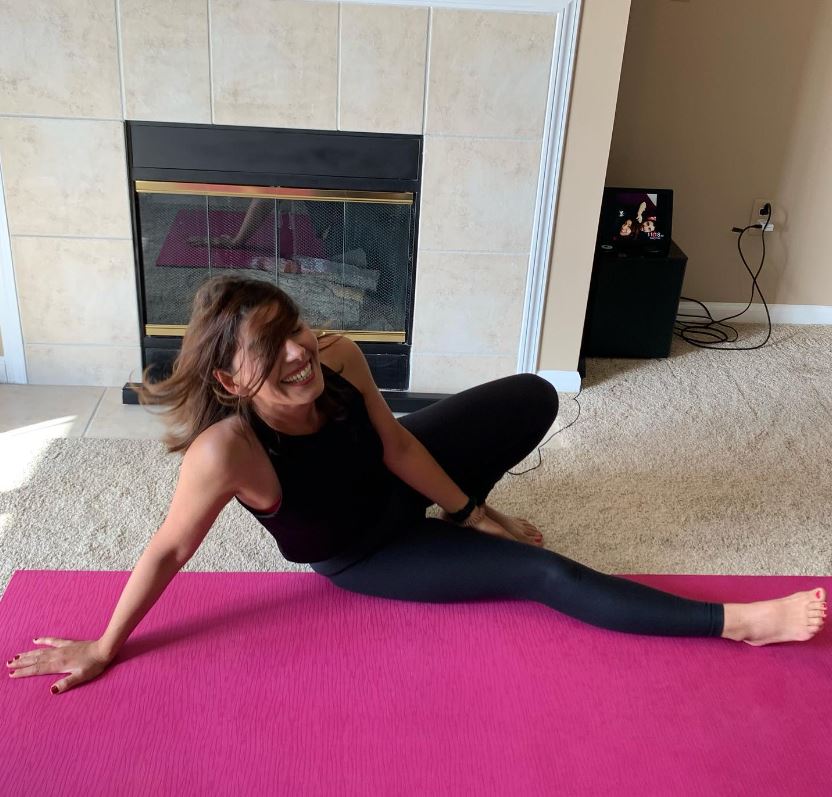
I felt on the verge of tears and decided to go to the gym, dropping the kids at the gym daycare so I could have some “me time.” I joined a HIIT class and was about to take a shower when I spotted my yoga teacher. A wave of relief washed over me. I told her I was done for the day but needed her motivation and positive energy, so I joined her Surrender Yin Yoga class.

That one hour felt like a gift. It gave me time to reflect on my thoughts, disappointments, and gratitude for taking a moment to exercise, meditate, and reconnect with myself. She reminded us that every moment is part of the healing process and encouraged us to have a beginner’s mind.

Afterward, I felt renewed, and a few realizations came to me:

• I’ll check in with a trusted colleague for his perspective on Monday.

• Next time I feel challenged, I’ll remember to pause, breathe, and even excuse myself to take a five-minute break.

• I won’t let anyone occupy space in my mind, especially if they’re being rude. Instead, I’ll brush it off and focus on the bigger picture.

Finally, I reminded myself to ask, “Will this matter one year from now?”

I booked next week’s yoga session because I need yoga as much as I need my coffee—and I don’t need unpleasant situations to force me into self-care. This experience helped me refocus on my goals and remember that even experienced professionals sometimes feel overwhelmed. I’ve also started Managing Emotions in Times of Uncertainty & Stress by Yale, to better manage my feelings in these situations because, ultimately, I know I can’t change or control others.

If you have tips for navigating similar situations, please share. I know this won’t be the last challenge, and I’m open to building more coping mechanisms. ☺️

From Skeptic to Superfan: My Journey with Podcasts

My husband and podcasts? It’s a love story! He can turn a 5-minute chore like taking out the trash into a whole podcast episode. Airpods in, he disappears into another world. It used to drive me a little crazy.

A few years ago, I tried podcasts myself – project management stuff, even Harvard Business Review – but nothing clicked. Until a few weeks ago!

Now it is my turn:) Podcasts have become a life-changer and a wonderful source of work. I recently got hooked on “Coaching Real Leaders” with Muriel Wilkins. She is an amazing executive coach and the way she coaches the real-life leaders in her podcast completely changed my perspective on how I should approach my career.

There’s a whole world out there waiting to be explored. You can find anything and everything that may guide you. For example, today, I listened to the episode ” How to Build the Life You Want” from How To Academy Podcast which offered some practical tips that I’m excited to try!

I’d love to hear about your experiences and recommendations. What podcasts have captured your attention and left you wanting more?

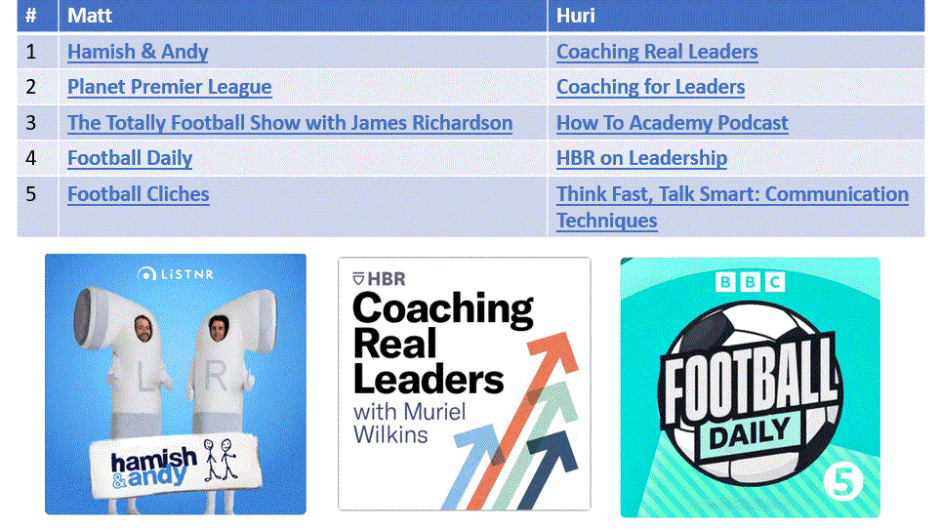
Here are hubby’s and my top 5 Podcasts

# Matt Huri
1 Hamish & Andy Coaching Real Leaders
2 Planet Premier League Coaching for Leaders
3 The Totally Football Show with James Richardson How To Academy Podcast
4 Football Daily HBR on Leadership
5 Football Cliches Think Fast, Talk Smart: Communication Techniques

Codependent No More by Melody Beattie

Codependent No More by Melody Beattie, is a unique self-help book that shows the readers how to uncover and treat problems caused by living with dysfunctional family members.

As I read, it became obvious that toxic family members impact our lives and habits. Most of us aren’t aware of it because we don’t think we are the ones who have problems. However, living with these kinds of people shapes our behaviors, habits, and lifestyle; and is called “codependency”. This book is about codependent people who survive living with dysfunctional people.

The first step is to accept that a codependent person can be anyone who grew up inside a dysfunctional family or anyone who has married or lived with someone with an addiction (such as to alcohol, drugs, or food). The book mainly focuses on alcoholics; however, it provides methods applicable for similar conditions. I’m sure many people who don’t have obvious dysfunctionality in their lives may put away the book, but dysfunctionality has a wide meaning beyond those with additions.

It can be any extreme characteristic, such as spending more than one can afford, saving to the point of making yourself miserable, experiencing constant family arguments, disrespecting partners, or being materialistic. For example, in my family, my mom and dad constantly competed with each other, when we were growing up. It was for even simple things such as, cooking the same meal in different ways and asking us who cooked the best. Until a certain age, I always picked dad because I didn’t want to disappoint him. In the past, I never thought their competition was some kind of dysfunctionality but, as I grew up (and tried to find my true north), I realized the negative impact it had on my personality. For us to grow and develop, we must identify any dysfunctionality in our lives to overcome codependency.

The second step is doing something to recover if we are codependent. When dysfunctional people recover or leave our lives, we don’t get better. To do that, we need support groups to receive some kind of treatment and learn to heal. This is what most people are missing. We are not aware of the impact of dysfunctional parents or partners, and how they shape our personality. We assume we will live good lives once they recover or we move away from them. If we are not happy with who we’ve become or our current circumstances we blame the dysfunctional person. Most of the time we play the victim because we don’t know we need help, or how to take responsibility for our lives. We need to stop focusing on others and accept that we also need to recover.

Another clue of being codependent is living our lives for others. Codependent people like the feeling of being in control and being needed by others, even though they may continually complaining about it. They take care of others, try to solve their problems, and make decisions for them. In the end, they expect them to behave and act the way they want. They believe that if we don’t help or control the people in our lives, they will get worse. The truth is they are wasting their time, as they truly can’t change anyone. The only person anyone can change is themselves; we can live our best life and become an

example to others. If they need help, we can do so, not by taking care of them financially and emotionally, but by listening, understanding, and being an example.
Another sad truth is that most of us are not aware of our situation, and we don’t see that we like being in control of others’ problems, instead of facing our own problems or issues. We must learn how to take responsibility for ourselves and let others do the same. It is essential that we learn to do this. In the end, it is our life, and we should live the best life we can.

If we have any negative trend in our lives, we need to fix it because as codependent we may keep finding dysfunctional friends, partners, and even raise dysfunctional kids. So, the best thing we can do is not to wait for the people in our lives to recover or change. We need to stop doing things for them or taking care of them. They will end up doing what they should do. If not, we can help if they want but can’t dedicate our lives to them and expect them to change or get better.
It was an eye-opening book. I read it because I felt like I tend to try and control the people I care about, such as my sisters and my mom. The cover of the book was what caught my attention: “How to stop controlling others and start caring for yourself.” After reading it, I decided to stop expecting my sisters to live the life I expected them to live. For example, last year, I read so many beautiful self-help books about self-compassion, self-care, meditation, and setting goals. I recommended these books to my sisters, but they couldn’t find them or made excuses not to read them, even when I ordered the books for them. They didn’t even appreciate my thoughts or recommendations which left me feeling disappointed in them. I decided not to waste my time listening to their complaint and will just let them live their lives.

Overall, I decided that the book didn’t really apply to my life a great deal, however, I still liked the ideas it presented. It did show examples where we can all focus on our lives and take full responsibility for our decisions, instead of worrying about, or trying to control, others. If we don’t we will waste our lives feeling angry and unhappy. If you are a codependent person, reading this book could be a life-changing journey and open your eyes to your behaviors. Within it, you will see the steps necessary to make big changes in your life and escape the bonds of codependency.

Focus on Yourself and What You Can Do!

“The only one you should compare yourself to is you. Your mission is to become better today than you were yesterday. You do that by focusing on what you can do today to improve and grow.”

  John Maxwell

Do you work after work hours, even sometimes at the weekends? There is no right or wrong answer to this question. Most of the time, we all do what feels right. In the past, I was heavily against working overtime. When I had to, I used to complain to my family and kept thinking about the people around me who got paid as much as I did, and who didn’t work as hard as I did. Not only would I feel angry but also, I would feel unhappy. This is another example of how we become unhappy by comparing ourselves with others. Finally, I learned to focus on myself, which took me more than ten years. I still work overtime. However, I’m happy to be able to complete my tasks because I see it as my responsibility. The question is, how can we work longer hours without feeling annoyed and still have time for our ourselves and our families?

The first mistake we all make is trying to separate our work and personal life. However, it is not possible to unplug our minds after work. Our personal lives impact our work life as much as our work lives impact our personal lives. So, we need to learn to be flexible and adapt to the new circumstances at home and at work instead of focusing on the idea of work-life balance. For example, if we have urgent customer deliverables or delays in our projects, we can check our e-mails and work on the uncompleted tasks after spending some time with our family. So, even if we end up working several hours at home, giving a break will refresh our minds and help us to approach our work with a positive attitude. If not, our minds will keep thinking about unfinished tasks and unanswered e-mails.

The second mistake we make is trying to avoid the issues and late tasks. When we go home, we can stop thinking about work; however, the next day, the same issues and even more tasks will be waiting for us. So, regardless of the time, weekdays or weekends, the best thing is to get things done and empty our minds. This will allow us to feel in control instead of feeling lost and confused at work. At least that’s what works for me.

The third mistake we make is being annoyed by others at work. In the work environment, we have all kinds of people, and not all of them feel the same responsibility and ownership of their job. This was the hardest to learn because wherever I have worked, there have been people who have found time to chat for hours about non-work-related issues, watch YouTube videos, shop online, study for their degrees, and come to work 9:00 am and leave at 3:00 pm. I accepted this reality, and I can’t change this fact. So, when I struggled to finish my tasks after a long working day and brought work home, I couldn’t help myself and hated my life.

Finally, this year, I learned to focus on my job and myself. Everyone is responsible for their actions, and if they feel comfortable the way they spend their time at work, it is their problem. It sounds simple, but it is not easy to apply. Back in February, my husband and I took a course called  The science of well-being, which had a huge impact on us. It showed us that most of the time, people were unhappy not because of themselves but because of the other people around them. For example, they observed employee happiness and satisfaction before and after sharing with them how much their colleagues were making. If their colleagues were making more than them, their happiness and performance level changed drastically. The course shared many other eye-opening scientific studies and surveys that woke me up to the fact that that’s what I was doing all these years.

Another surprising example was in one study, and they found out that if your neighbor purchases a new car, most likely you will change your car in six months. This is another example of how we let others impact our life and happiness. If we can learn not to focus on others’ salaries, homes, and attitudes, we will have better lives.

Another mistake we make is trying to keep things in our minds. Countless researchers suggest that when we remember to send an e-mail, buy something, and plan for a meeting, or when we feel angry, we should write it down and empty our minds. They even recommend to keep a notepad next to our bed, so we can jot down anything which pops into our mind. For example, over the past few weeks, I had to work in the evenings and weekends because I had so many tasks that I needed to review, and I didn’t feel comfortable leaving them undone. On Friday morning, I woke up at 4:00 am and found myself thinking about work. I tried, but I couldn’t go back to sleep. I woke my husband up around 5:00 am, since he has 7:00 am meetings on Fridays. We decided to take a quick walk to get some fresh air. We were both happy because we started our day early, planned our day, and wrote down what we needed to do. The best part was I didn’t think about anything or anyone else other than having a productive day to be able to enjoy our weekend.

Overall, it is all up to us how we approach our work and perform it. If it helps us feel better and accomplish our task more efficiently, it is Ok to work overtime. As long as we understand our responsibilities and have an optimistic approach to our work, we will eventually show our differences and feel successful and fulfilled with our jobs and lives. In the end, we have one life to live, so we should focus on ourselves and make the best of our work and home life instead of trying to find a work-life balance or comparing ourselves with others. As  John Maxwell says, “The only one you should compare yourself to is you. Your mission is to become better today than you were yesterday. You do that by focusing on what you can do today to improve and grow.”


Learn to Escalate, Whether You Like It or Not!

If you are a program manager, don’t you feel sometimes you are babysitting for your team members? It is a challenging job, considering each program launch takes around two years. During this duration, we lead every aspect of the program and expect each team member to understand their responsibility. In the real world, it doesn’t happen all the time. One way or another, we can have difficult people in our team who give us a hard time. So, how can we handle these difficult people with professionalism, especially when we are under time pressure from our customers and upper management?

We are the owner of the program, and it is our job to remind our team members of the project scope, milestones, and actions that need to be taken to meet each customer’s deliverables. But so many times sending e-mails, skyping, calling, texting, and having meetings with our team members are also part of our job to ensure they are doing what they promised to do.

If you are new in program management, the first rule you need to learn is to follow up on the actions. Otherwise, you will be talking about the same open activities for the next meetings. Unfortunately, if we don’t remind them and ask about their progress, again and again, our team members may feel what we are requesting is not urgent and can wait for another week. This part of our job is necessary, but it shouldn’t be our actual job because we need to coordinate and perform many other activities and make sure that each dependent activity progresses as planned and the next activity can start on time. The nature of our job is not only to connect each project step and activity but also to build connections with our team and customers. Overall, our goal is to complete our program successfully and celebrate our accomplishments as a team.

Most of the time, we have limited time between the customer milestones, and we have to focus on the big picture by coordinating our team members’, plants’ and suppliers’ activities. When working hard to put things together, we may be challenged and get pushback from our team members about absurd reasons. This is one of the biggest problems we all face, but we need to find ways to resolve conflicts if we can; if not, we need to learn how to escalate.

I’m not a person who escalates issues or people because I take my job personally. I used to think that escalating issues or people is for weak program managers, who can’t handle their work. So, I’ve not escalated most of the problems or difficult people that I dealt with over the past 15 years in my career. I’m not proud of it because I added extra stress and pressure on myself by thinking this way. Since 2016, I have taken many online classes and read many articles and books to understand and learn how to manage my team and deal with difficult people. However, as I lead more profitable programs, I also understand the importance of my position and the impact of possible delays.

As a program manager, we are responsible for our program’s success, so if we miss customer deadlines, we are the ones who need to take responsibility and blame. However, if there are external issues that may delay our activities and keep us awake at night, we must make our managers aware of the situation. It is not complaining to our managers about our suppliers, customers, or team members. We can prepare a one-page executive summary and explain to them: What are the issues? What actions did we take to solve it? What are the risks for our program? This must be done promptly, not in the last minute of the customer delivery date. If we don’t escalate the high risks on time and miss our deadlines, it will be solely our fault even though it is caused by someone else. What is more, the escalation will come from the customer for missing their milestones.

So, how can we make sure we don’t come to this point? We need to explain to our team members the consequences of their actions, and why we need their response at certain times. We are the primary customer contacts who oversee their expectations and required changes. Later on, we share this information with our team members to be able to align our internal activities. In a perfect world, we receive updates and feedback from our customers on time and should have enough time to align our team members. However, sometimes we face last-minute changes and requests, so we expect our team members to be more proactive and supportive. Some of them are proactive, but some of them are reactive. Unfortunately, we can’t control anyone’s reactions; however, we can control our responses. We can share the customer process and system with them and explain how things work in our PM world. We also should understand these people have other projects to support, so we should give some time to complete their work for our program if possible. However, sometimes some of them have an attitude problem, without listening or trying to understand the situation they resist and don’t want to do their job. After all our attempts, if they still don’t want to take any action, complain, and give us a hard time, there is nothing wrong with sharing the situation with our managers.

In my experience, we’ve always found a way to complete our actions and meet our customer deadlines on time. Sometimes, we’ve had to negotiate with our customers for an extra week or two, which is another part of our job, but we’ve always managed to meet our milestones.

There will always be last-minute changes in our programs. As a team, we need to apply all our resources, resolve the conflicts, and focus on our goals. We should create a positive relationship to create a positive environment. Regardless of what we do and where we work, we will always have some difficult people around us throughout our careers. The name, face, or position may change, we need to learn how to manage these people. On the other hand, we need to remember these kinds of people must also be difficult for others, so we shouldn’t take anything personally and continue to be resilient.

There may be times we get frustrated at work, but it shouldn’t steal our joy and keep us awake at night. We should do our best to keep our professional relationship with everyone while ensuring everyone is working on their assignments. In the end, the reason why we are working together is to launch a new program, so our company can start making money from it as soon as possible. If there is a person, supplier, or anything that may delay our customer milestones, this needs to be escalated, whether we like it or not.

Couple Goals: Sip&Paint

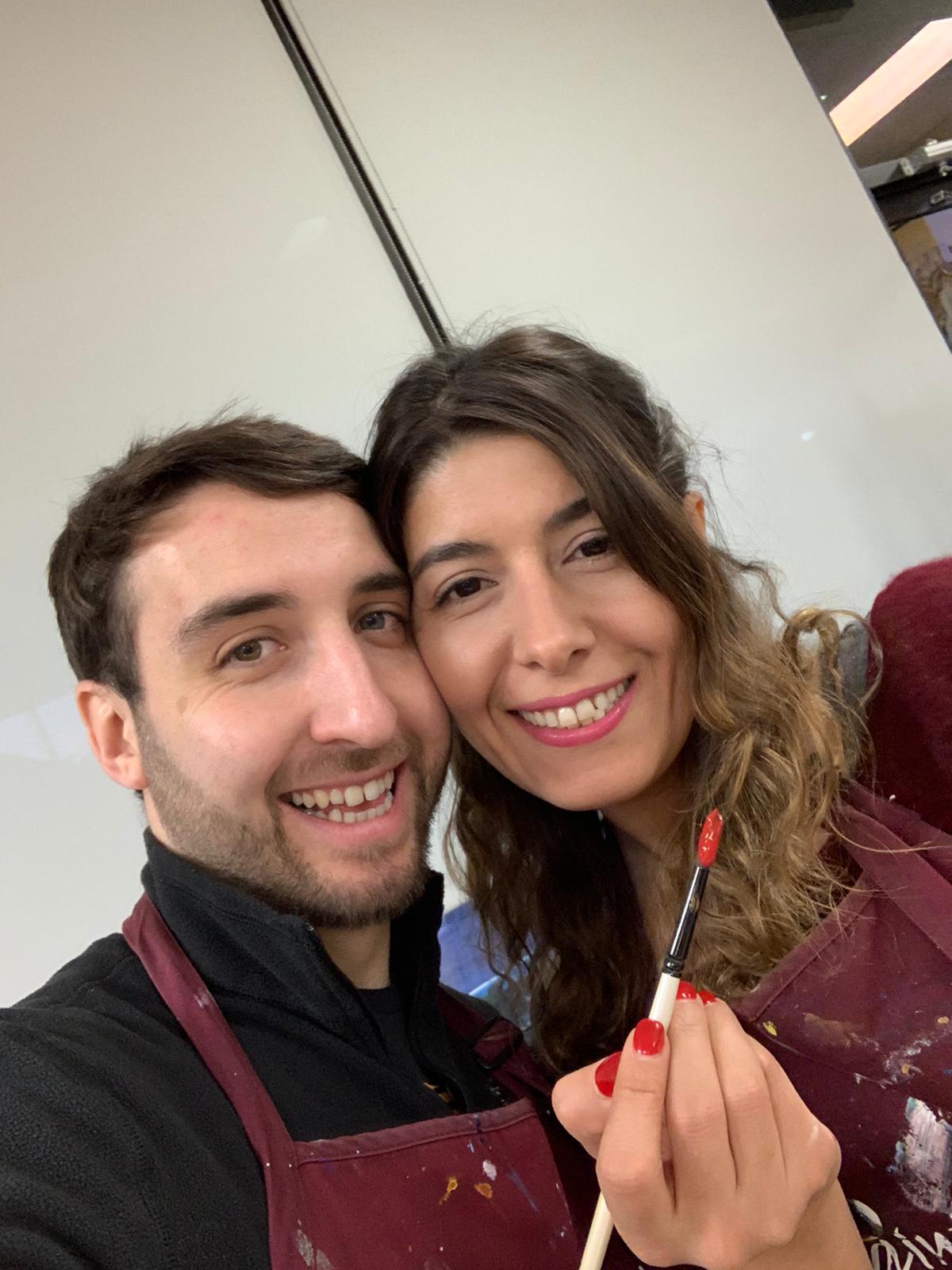
Finally, my husband and I tried sip and paint. At the beginning, we both were very skeptical because we didn’t have any painting experience previously. Also, we weren’t feeling comfortable doing activities with strangers. However, we did not let our anxiety change our decision and booked an online class for a cold Sunday afternoon. Based on the available classes, we did our best to pick something simple and meaningful to paint.

We arrived early to understand the process. It was a big studio, and there were so many other ongoing classes. In one of the classes, they were celebrating a birthday, and in another one, a big group was having a get-together. We were pleased to see that all of their paintings were quite nice, and everyone was having fun. After the studio tour, we took our places at our workstations and waited for others to arrive.

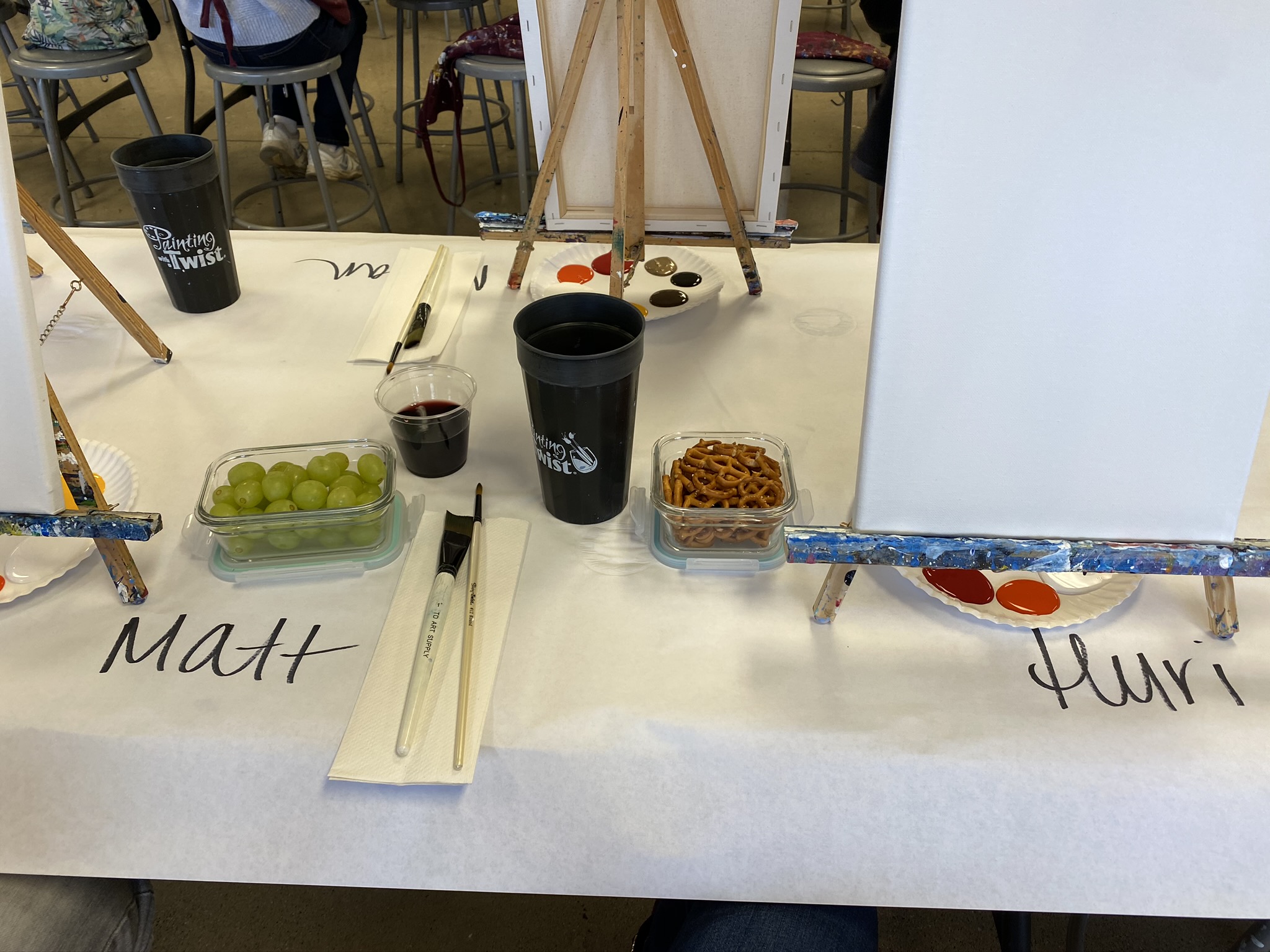
We were still very excited and felt that it was a good decision from what we saw so far. Our workstations were ready with the painting materials. Also, we brought our drink, fruit, and some pretzel with us. I wasn’t sure if anybody would eat, but I wanted to be prepared if they did. So, we were ready to paint two cardinals.
They provided two completed samples for us to review while we were painting. Also, the instructor painted her own painting while explaining the process. She also prepared bird templates during the classes. I think she should have done it earlier. Instead of cutting the templates when we were there, she should have spent time with us and checked on our progress. Maybe other teachers do better preparation; since it was our first experience, we did not know. Next time, I will definitely ask this question before I book my class.


Overall, it was a great experience. Of course, we did not become artists after this experience, but we both completed our paintings successfully. Besides, we had a lot of fun. We compared our paintings and helped each other. In the end, we were happy with the results. After this experience, we understood better the value of doing out of ordinary activities together. Although we enjoy cooking, walking, running, or traveling together, trying something new was fascinating.

If you never tried sip and paint, I highly recommend it to anyone who wants to spend some quality time with their loved ones. You can learn new things about each other and be surprised by the hidden talent they or you may have.

How to Receive Feedback Mindfully

Finally, someone called me a high performer. I know I’m a high performer, but it still feels good to hear it from others. Even though I shouldn’t need anyone to tell me these words, I still would like to hear them. I’m still learning not to feel elated when I’m praised or not to feel discouraged when I’m criticized. However, I’m not where I want to be yet.


 

Last year, I accomplished all of my targets. I believe my supervisor and my manager are happy with my performance, but I still want to hear their genuine positive feedback and appreciation. If they do not show appreciation during my performance review, would it hurt my feelings and demotivate me? Most likely, it would. The question is, why isn’t it enough for me to be aware of my value, contribution and hard work, and just take in their point of view, positive or negative, without feeling any extreme happiness or frustration? There is nothing wrong with feeling this way as long as we are aware of our emotional state and not letting our emotions control us.


Scientists call this skill self-awareness, which is the first element of emotional intelligence. Self-awareness means not only being aware of our personality, emotions, strengths, weaknesses, and our value but also seeing ourselves, our attitude and actions as others see us. If we are aware of our capabilities, hearing an appreciative comment will not make us jump for joy or hearing negative feedback will not make us miserable. So, if we are a highly self-aware person, our response will be the same for both situations. We are still the same person. Our value and our contribution to our work have the same value; it is just feedback, which may or may not be accurate. So, we don’t need to overreact based on someone else’s opinion. However, we can honestly assess the feedback and try to understand where they are coming from. I know it is easier said than done, but it is the only way to grow. If not, we will be experiencing a similar emotional fluctuation again and again.


The good news is that I’m not the only one who needs to improve my emotional intelligence and self-awareness. According to the Harvard Business review’s nearly five-year research on the subject, they’ve discovered that although 95% of people think they’re self-aware, only 10 to 15% actually are. At least, I accepted that I have to work on this skill for my own well-being. 


Overall, this year I decided to take all the available emotional intelligence courses and read all the available books and articles. The first course I’ve started taking is called ‘ Empathy and Emotional Intelligence at Work. ‘ Berkley University is providing this online course through edX, which is an online course platform. My goal is to learn to manage my emotions and make better decisions at work and for my personal life.  


Many of us strive for a meaningful life and self-growth. However, most of the time, we avoid receiving feedback because we do not know how to handle it. I suggest that for the next few weeks, we seek feedback and try to understand the reasons behind it without labeling it negatively or positively. In doing so, we might be surprised to see the enormous benefits to our lives.

Teamwork or Lack Thereof

Every week I learn something new when watching soccer games. I watched soccer before, but supporting a team is a totally new experience. My husband and I support Aston Villa, and our team is very close to the relegation zone. To tell the truth, since we were promoted to the Premier League, every game has been a battle, and we’re not playing very well. We all accepted that there are no easy games in this league, but I feel like our team are not putting in enough effort.

We still have eleven games before the end of the season. So, I want to believe that things will get better, and we will stay in the Premier League. On the other hand, I feel like we do not have the right team. I’m aware that I may seem harsh on the players by saying this, but I have two good reasons for this point of view. First of all, I am not a soccer expert, so I am not going to talk about how to build a good soccer team. Besides that, I’m still learning the rules and trying to understand it better. But I am a program manager and I work with teams that do not report to me directly but work for my programs. And I know very well how team members contribute to our success.

We played Tottenham two weeks ago. We were to win the game but at least come away with a point. Even though we played pretty well, we lost the game after conceding Hyeung-Min Son’s 94th-minute winner. He looked happy when he scored the goal, but we all could see the pain on his face. Later on, we found out that he played with a fractured arm, and in this condition, he played the entire before scoring a last-minute goal for his team. Who would not want to have a team player like that? It was awe-inspiring and an excellent example for all other footballers.

Last week, we faced another critical game, this time against Southampton. In the first half, one of our players, Anwar El Ghazi, fell to the ground with an apparent facial injury. It seemed to me as if he was poked in the eye, but did not seem too serious. He lay on the pitch several minutes, whilst receiving treatment, while our frustrated captain wanted him off the pitch to allow Villa to continue. Shortly after, El Ghazi was substituted because he felt he could not carry on. The problem was that we did not have anyone who could replace him, and we needed him.

Why didn’t he continue playing? Was his condition critical? I cannot answer these questions. However, when our team are in a relegation battle, I expected all the team members to show desire to win. If we lost the game, we could have said at least we played well. He did not try to get back to the game. At that moment, I hoped that we could win without him and show him he was not that important. We could make things happen without him.

The same day, the same game, a Southampton player, Moussa Djenepo, also fell to the ground with a head injury. He was hit badly, and he was clearly bleeding. It took him 2 minutes to get to his feet. So, how could we expect to win against this team? A team that really wanted to win the game. Another sad truth was, they were not even in the relegation zone. They wouldn’t lose anything if they lost the game. Also, they weren’t one of the best team, and we were as good as they were if our team members had the right attitude.

We lost the game.

With this third incident, while we were watching the game, I had my aha moment.  Watching soccer showed me one more time that having the right people in your team is the key for the success.  It is very similar to our work life. We rely on each other; as our team members’ actions impact our success. When we have an urgent deadline, we may have to stay longer at work, or we go to work even we are sick, or even our kids are sick.

When our footballer was leaving the pitch, while holding his eyes, I was thinking about teamwork. I wished to see blood or something that could have made me feel less upset with him. Less than 30 minutes in the game, he had quit on his team. If we do not have dedicated footballers who understand their responsibility, we will continue to lose and end up relegated from the Premier League.

I know we all need good leaders, managers and coaches, but if a team member does not want to be part of the team, the world’s best manager can’t make it happen. Regardless of the situation and sector, if a team member costs us continuously a game or a project, we should let them go. In our case, El- Ghazi’s attitude may cost Aston Villa their Premier League status.

I will let the pictures speak for themselves.

If I find out El Ghazi had brain damage or loss of sight because of the tackle, I will write another post about why we like judging people too quickly. At this moment, I could not see any news related to his situation.  He does not want to be part of the team and he does not deserve to put on Aston Villa shirt.

Does Having a PMP Certification Make a Difference?

PMP is the abbreviation for Project Management Professional. It is a globally recognized certification that shows as a program manager; you know what you are doing. However, there are many program managers out there who have extensive knowledge and experience without the PMP certification. In other words, is having a PMP certification beneficial? Let’s review and decide together to see if it matters or not.

In my early career, I started work as a project leader. Just before I started, the company had been awarded its very first global project. They needed someone who could speak English with a technical background. I was very inexperienced. I did not question many aspects of the Job. Looking back, I could have asked for training, mentoring, or more support. Nothing seemed to be available, and I did not know what I needed to know. Previous projects were internal projects that were managed by e-mails. I felt lost. When I found out I was on my own, I used Google to search for everything. I would have searched and created something new whenever our customers asked for anything new. If they were happy, I knew I did something right. Needless to say, I was not aware of the PMI organization. If I had known about it, that could have been very beneficial for me. Later on, I found out that Project Management Institute had a PMP handbook.  Even having it could have helped me and guided me. This was 12 years ago. Many things changed since then. Now, Google provides much more information than ever. 

When I moved to the United States, I worked in manufacturing and quality departments, but deep inside, I missed working as a Project Manager. When I looked at the opportunities, most of them were looking for the PMP certification. It was another challenge because I worked on projects without structures. For this reason, I had to combine my experiences with the PMI project structures, even sometimes needing to forget what I had known and learning the right way.

The certification exam contains five sections: initiation, planning, execution, monitoring, and closing. Other than these must-know steps, you need to know cross-functional skills such as active listening, facilitation, delegation, conflict management, etc. Not to mention, it is a 5-hour 200 question exam. Besides, it does not ask yes-no questions. It has so many situational questions from real-world examples. It took me more than a year to feel. During this process, I learned a lot, but the exam stress was overwhelming, and it was a hard exam. Luckily, I passed my exam in my first attempt. However, I wouldn’t try again if I failed.  I didn’t think that I could do any better or work any harder. Not only was it an expensive exam, but also it was extremely tough. I was fortunate that my HR manager supported my professional development and paid for the exam, which was around $500.

Was it worth it? It was; I think it only helped me to have more job interviews. On its own, isn’t that a good reason to have it?  But as PMI states, did I get paid 25% more than my other colleagues just because I have PMP? Not at all. It didn’t have any impact whatsoever.

On the other hand, the certification is valid for only three years. PMI requires you to renew your certification, which means you need to complete 60 PDUs, which could be courses, training, or workshops. In addition to that, you need to pay a re-certification fee of $150. After learning this, I will ask the same question again, is it worth it? It is. Keeping your certification active means during the 3 – year, you need to complete 60 PDUs on technical, strategic, leadership, and business subjects. It pushes you to learn continually.

If you are a program manager, PMP is good to have. However, it does not mean you are any better than PMs who do not have it. Is having the certification worth it or not?  Again, it is really up to you.  If you are new to the PM world, it is a great guide. Also, to keep the certification active, you need to continue taking courses, so if you like learning and want to be up-to-date with the latest courses, it is right for you. On the other hand, if you are thinking that you will increase your salary by 25% by having it, good luck with that. Neither I nor my colleagues at other companies had any salary increase.

I’m adding the PMP requirements for your review. Maybe it will be your new challenge!

PMP Exam Content Outline (Current) 

Remember, Tomorrow is Not Promised!

One day you will wake up and there won’t be any more time to do the things you always wanted. Do it now.”  Paulo Coelho

Last week, I read five heartbreaking articles about people who lost their lives. I didn’t meet these people in person, but this sad news broke my heart and left me in tears. It made me question the meaning of life. We can lose it anytime, any moment

I am sure we lost more than five people last week. Here are the people that I’m aware of who said goodbye to this world. We lost a successful Turkish businessman, Mustafa Koc, at age 55 from heart-attack. We lost a Harvard professor, Clayton Christensen, at age 67 from cancer complications. We lost a successful businesswoman, Leila Janah, at age 37 from Epithelioid Sarcoma, a form of cancer. Also, we saw on TV that Kobe Bryant at age 41 and his daughter at age 13 were in a helicopter accident. They lost their lives along with nine other people.

These people were young, successful and talented. They had a positive impact and influence on many people’s lives. These people had families, hopes, and plans, but they lost their lives too soon. 

These unfortunate events made me think that tomorrow is not promised to anyone. In other words, we can lose our lives, or we can lose our loved ones any time, at any moment. However, knowing is not half of the battle. Even though we all are aware of this possibility, most of us still assume that it won’t happen to us. So, we continue to live a hectic life. We still must go to work, meet deadlines, and take care of our families. As a result, we do not even want to think about this unpleasant inevitable event. 

Paulo Coelho explains my point very well, “One day you will wake up and there won’t be any more time to do the things you always wanted. Do it now.” So, how can we find a balance between our responsibilities, social pressure, and the things we wish we were doing? In other words, how can we have a more meaningful life while dealing with many meaningless things? There should be a way to create a nice work-life balance, so we don’t wish for weekends and vacations. Also, we should not wait for our retirement for the things we wanted to do.

Since death is inevitable, the only thing we could do is try to live our life fully. According to the course I am taking, ‘The science of well-being’, the problem is we compare ourselves with others and look for happiness in the wrong places. At least scientifically there are simple things that you can add your daily routine and feel happier, like gratitude, social connection, meditation, and exercise. Also, here are some ideas that come to my mind that I am hoping to apply to my life in my limited time in this world. 


Learn to enjoy the moment, do not dwell on past mistakes, everything is an experience

Let go of all the mistakes and unpleasant experiences, reset your mind daily

Focus on what matters the most in your life, reconnect with family and friends

Spend time with the people who matter

Be grateful for what you have

Learn from your experiences and create better lives for yourselves

Do things you love

Do not compare yourself with anyone

Exercise more, sleep better, eat good food.

Celebrate more, do not rush to the next item on your list

Be kind to yourself and others 

 We will be happy when we have inner peace. My husband’s and my goal are living our best life, and also investing in our future smartly. If our times come earlier, at least we can feel relief knowing that we have done our best and lived fully.